The bill, introduced on Tuesday, calls upon the Federal Trade Commission (FTC), the Department and Justice (DOJ), and the Department of Health and Human Services (HHS) to report to Congress about the threat of minors accessing fentanyl via social media platforms.
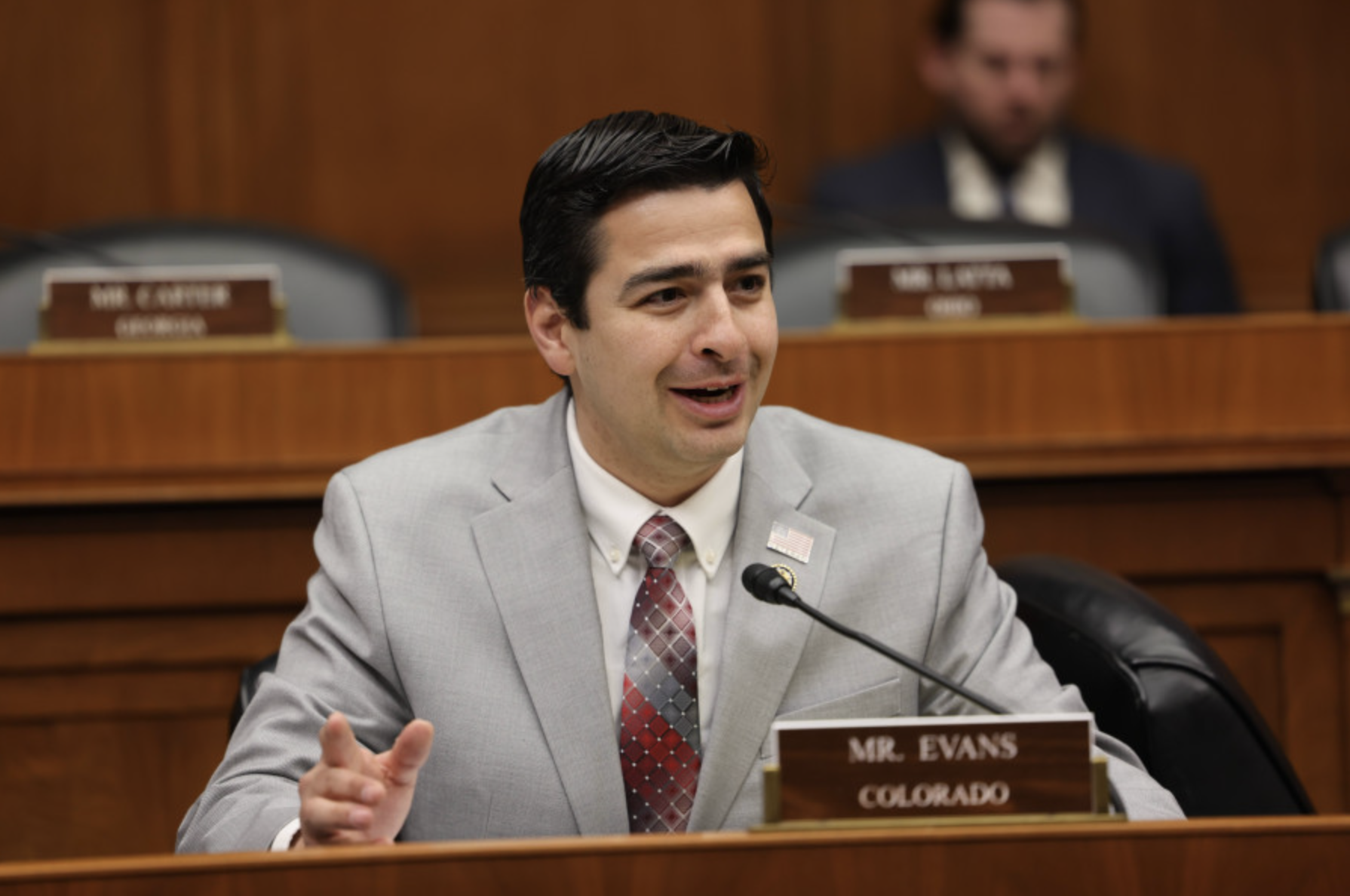
U.S. Congressman Gabe Evans, who represents most of Weld County, introduced a bipartisan bill on December 2 alongside Michigan Congresswoman Debbie Dingell titled the No Fentanyl on Social Media Act. The act calls upon the Federal Trade Commission (FTC), the Department and Justice (DOJ), and the Department of Health and Human Services (HHS) to report to Congress about the threat of minors accessing fentanyl via social media platforms.
“As a former cop in Colorado, I have seen firsthand the devastating impacts that drug trafficking has on minors,” Evans said. “As a father, I know how important it is that we do everything possible to protect our kids and future generations. With social media becoming increasingly prevalent and accessible to children in our country, it is more vital now than ever that we address the ways deadly drugs like fentanyl are trafficked into our communities so that we can keep young people and families safe.”
If passed into law, the report will detail the methods by which minors access fentanyl intentionally via social media as well as cases where minors access counterfeit pills that are laced with fentanyl. The three departments would coordinate to issue recommendations on ways to respond to this threat.
Chelsea Brundige wrote an op-ed for the Colorado Sun in April of 2024 that discussed the need for legislation to crack down on fentanyl distribution via social media platforms. In 2020, Brundige’s son Miles died from an overdose after purchasing fentanyl-laced pain pills on Snapchat while he was in his sophomore year at the University of Colorado in Boulder.
Legislation was passed by both state chambers in Colorado to require social media companies to remove flagged accounts if they are selling guns or drugs, or partaking in sex trafficking or sexually exploiting minors. Governor Jared Polis vetoed the bill out of concern that the language of the bill “erodes privacy, freedom, and innovation, hurts vulnerable people, and potentially subjects all Coloradans to stifling and unwarranted scrutiny of our constitutionally protected speech.”
The federal bill does not dictate any specific actions, but requires the three federal agencies to gather data and issue recommendations to counter the increasing threat. Evans also proposed the “Combatting Fentanyl Poisonings Act” in September. The bill was referred to the judiciary committee and no action has been taken since September.
Colorado has the second highest per-capita rate of teen deaths from fentanyl overdose in the country based upon 2020-2022 data. The Boulder County Coroner’s 2025 drug report showed a 41% increase in fentanyl-related drug deaths, even as total drug-related deaths decreased slightly compared to 2024.
“Having personally witnessed the danger of the opioid crisis in my own family, I have seen its devastating consequences and know we must do everything we can to combat it on all fronts,” Dingell said. “Unfortunately, we are seeing newer ways that young people are finding and buying fentanyl, including on social media. There must be safeguards in place to prevent kids from accessing fentanyl so easily through these platforms. This legislation will make sure we better understand how social media is contributing to the opioid crisis, and what we can do to address it.”
The full bill text can be read online.