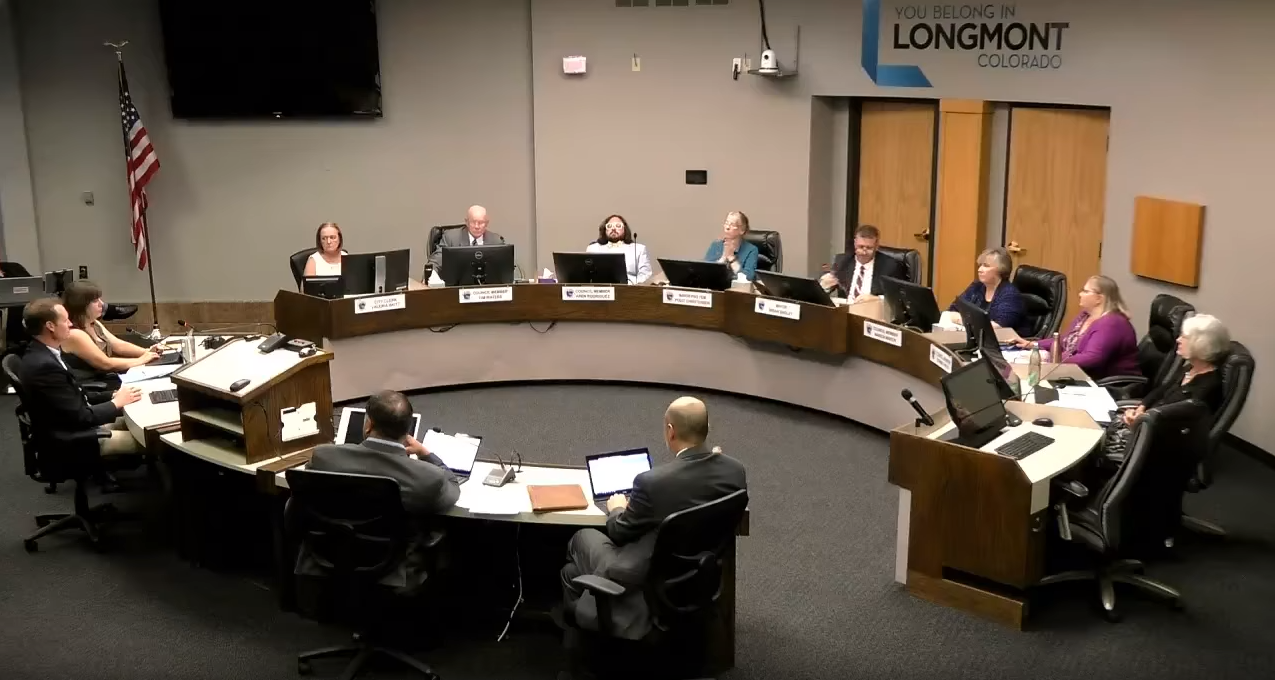
If council keeps the measure moving Tuesday, ranked-choice voting is expected to return Aug. 25 for another formal action before the proposed charter amendment is finalized for the Nov. 3 ballot
Longmont voters could be asked this November whether they want to fundamentally change the way they elect the mayor and City Council, but the proposal still has to clear several procedural steps before reaching the ballot.
The Longmont City Council is scheduled to meet at 7 p.m. Tuesday, August 11, when ranked-choice voting is expected to return as part of the process of formalizing a proposed city charter amendment.
Council members voted 6-1 on July 14 to direct city staff to draft a ballot measure that would allow ranked-choice voting in future Longmont municipal elections, with Councilmember Diane Crist casting the lone opposing vote, according to a report on the meeting.
That vote moved the proposal forward, but it did not complete the ballot referral process.
The measure is expected to receive additional readings August 11 and 25 as council works through the formal ordinance process and settles the language voters would see on their ballots. FairVote, a national organization that advocates for ranked-choice voting, says the proposal would take effect beginning with Longmont municipal elections in 2029 if voters ultimately approve the charter amendment.
The distinction matters because Longmont's July vote was widely described as putting ranked-choice voting on the November ballot. More precisely, council authorized city staff to prepare the measure, with the formal legislative process still underway.
Ordinances generally go through two readings. The first introduces the ordinance and schedules it for a public hearing. At the second reading, council can make changes, hear from the public and vote on final approval.
If the ranked-choice voting amendment completes that process, Longmont voters would make the final decision during Colorado's Nov. 3 general election.
Longmont currently uses a plurality, or "choose one," voting system. Voters select one candidate for an office, and the candidate receiving the most votes wins, even when that candidate receives less than half of all votes cast.
Ranked-choice voting works differently. Instead of choosing only one candidate, voters rank candidates in order of preference.
In a single-winner race, first-choice votes are counted initially. If one candidate receives a majority, that candidate wins. If nobody has a majority, the candidate with the fewest first-choice votes is eliminated. Ballots cast for that candidate are then transferred to the next-ranked candidate on each ballot.
That process continues until a candidate reaches the threshold required to win.
The Colorado General Assembly authorized municipalities to use ranked-choice voting in coordinated nonpartisan elections under legislation approved in 2021. The law also established requirements for voting systems, tabulation, auditing and certification.
Longmont presents an additional technical wrinkle because the city extends into both Boulder and Weld counties. State law began allowing municipalities located in more than one county to refer ranked-choice elections for coordinated administration beginning July 1, 2026, provided the counties can use compatible certified voting systems and meet other requirements.
That means Longmont is considering the change just weeks after that portion of state law took effect.
Longmont's seven-member council includes the mayor, three representatives elected from geographic wards and three council members elected at large.
The proposal has also raised discussion about whether some at-large seats could eventually be elected through a multi-winner form of ranked-choice voting. In that system, voters still rank candidates, but more than one candidate can be elected from the same contest. Ranked Choice Voting for Longmont, the local organization advocating for the change, has promoted that approach for the city's at-large seats.
FairVote has said implementation of a multi-winner system would depend in part on technical guidance from the Colorado Secretary of State's Office.
The exact language approved by council will therefore be important in determining what voters are actually being asked to authorize.
The July 14 council discussion followed months of debate over whether Longmont should change its voting system.
More than a dozen residents spoke in favor of moving the proposal forward during the July meeting, while several others urged council to reject it.
Supporters argue that ranked-choice voting allows people to vote for their preferred candidate without worrying that doing so could help elect a candidate they oppose. They also argue that requiring candidates to build support beyond their core group of first-choice voters can produce winners with broader backing.
Critics have raised concerns about the additional complexity of ranking candidates, the potential cost of changing election systems and the possibility that final results could take longer to calculate.
Implementation costs discussed by the city have been estimated at as much as roughly $150,000 initially, with ongoing costs estimated at about $7,000 annually, according to Longmont Brief's account of the July council discussion.
Those costs could include changes needed to administer, tabulate and communicate a different voting system.
Tuesday's meeting is not expected to settle the broader debate over whether ranked-choice voting is better than Longmont's current system. Instead, the immediate question for council is whether to continue advancing the charter amendment toward the ballot and what language residents should ultimately be asked to approve or reject.
A Colorado Legislative Council overview notes that several Colorado municipalities have used versions of the system for local elections.
Nearby, Boulder began using ranked-choice voting to directly elect its mayor in 2023 after city voters approved the change in 2020.
Colorado voters, however, rejected a much broader statewide ranked-choice voting proposal in 2024. Proposition 131 would have established all-candidate primaries followed by ranked-choice general elections for a number of state and federal offices.
The Longmont proposal is different. It would apply to municipal elections rather than changing Colorado's statewide election system.
Longmont's proposal would also require voter approval because changing the city's election system would require an amendment to its home-rule charter.
The city normally holds its candidate elections in odd-numbered years. Longmont's next regular municipal election is scheduled for November 2027.
Under the proposal discussed by council, however, ranked-choice voting would not begin until 2029, giving the city, counties and election administrators additional time to prepare.
Before that can happen, voters first have to be formally presented with the question.
Council's Tuesday meeting represents the next step.
The meeting begins at 7 p.m. in the City Council Chambers at the Civic Center, 350 Kimbark St. Residents can also watch through the city's online meeting system and livestream.
If council keeps the measure moving Tuesday, ranked-choice voting is expected to return August 25 for another formal action before the proposed charter amendment is finalized for the November 3 ballot.
Longmont voters could be asked this November whether they want to fundamentally change the way they elect the mayor and City Council, but the proposal still has to clear several procedural steps before reaching the ballot.
The Longmont City Council is scheduled to meet at 7 p.m. Tuesday, August 11, when ranked-choice voting is expected to return as part of the process of formalizing a proposed city charter amendment.
Council members voted 6-1 on July 14 to direct city staff to draft a ballot measure that would allow ranked-choice voting in future Longmont municipal elections, with Councilmember Diane Crist casting the lone opposing vote, according to a report on the meeting.
That vote moved the proposal forward, but it did not complete the ballot referral process.
The measure is expected to receive additional readings August 11 and 25 as council works through the formal ordinance process and settles the language voters would see on their ballots. FairVote, a national organization that advocates for ranked-choice voting, says the proposal would take effect beginning with Longmont municipal elections in 2029 if voters ultimately approve the charter amendment.
The distinction matters because Longmont’s July vote was widely described as putting ranked-choice voting on the November ballot. More precisely, council authorized city staff to prepare the measure, with the formal legislative process still underway.
Ordinances generally go through two readings. The first introduces the ordinance and schedules it for a public hearing. At the second reading, council can make changes, hear from the public and vote on final approval.
If the ranked-choice voting amendment completes that process, Longmont voters would make the final decision during Colorado’s Nov. 3 general election.
Longmont currently uses a plurality, or “choose one,” voting system. Voters select one candidate for an office, and the candidate receiving the most votes wins, even when that candidate receives less than half of all votes cast.
Ranked-choice voting works differently. Instead of choosing only one candidate, voters rank candidates in order of preference.
In a single-winner race, first-choice votes are counted initially. If one candidate receives a majority, that candidate wins. If nobody has a majority, the candidate with the fewest first-choice votes is eliminated. Ballots cast for that candidate are then transferred to the next-ranked candidate on each ballot.
That process continues until a candidate reaches the threshold required to win.
The Colorado General Assembly authorized municipalities to use ranked-choice voting in coordinated nonpartisan elections under legislation approved in 2021. The law also established requirements for voting systems, tabulation, auditing and certification.
Longmont presents an additional technical wrinkle because the city extends into both Boulder and Weld counties. State law began allowing municipalities located in more than one county to refer ranked-choice elections for coordinated administration beginning July 1, 2026, provided the counties can use compatible certified voting systems and meet other requirements.
That means Longmont is considering the change just weeks after that portion of state law took effect.
Longmont’s seven-member council includes the mayor, three representatives elected from geographic wards and three council members elected at large.
The proposal has also raised discussion about whether some at-large seats could eventually be elected through a multi-winner form of ranked-choice voting. In that system, voters still rank candidates, but more than one candidate can be elected from the same contest. Ranked Choice Voting for Longmont, the local organization advocating for the change, has promoted that approach for the city’s at-large seats.
FairVote has said implementation of a multi-winner system would depend in part on technical guidance from the Colorado Secretary of State’s Office.
The exact language approved by council will therefore be important in determining what voters are actually being asked to authorize.
The July 14 council discussion followed months of debate over whether Longmont should change its voting system.
More than a dozen residents spoke in favor of moving the proposal forward during the July meeting, while several others urged council to reject it.
Supporters argue that ranked-choice voting allows people to vote for their preferred candidate without worrying that doing so could help elect a candidate they oppose. They also argue that requiring candidates to build support beyond their core group of first-choice voters can produce winners with broader backing.
Critics have raised concerns about the additional complexity of ranking candidates, the potential cost of changing election systems and the possibility that final results could take longer to calculate.
Implementation costs discussed by the city have been estimated at as much as roughly $150,000 initially, with ongoing costs estimated at about $7,000 annually, according to Longmont Brief’s account of the July council discussion.
Those costs could include changes needed to administer, tabulate and communicate a different voting system.
Tuesday’s meeting is not expected to settle the broader debate over whether ranked-choice voting is better than Longmont’s current system. Instead, the immediate question for council is whether to continue advancing the charter amendment toward the ballot and what language residents should ultimately be asked to approve or reject.
A Colorado Legislative Council overview notes that several Colorado municipalities have used versions of the system for local elections.
Nearby, Boulder began using ranked-choice voting to directly elect its mayor in 2023 after city voters approved the change in 2020.
Colorado voters, however, rejected a much broader statewide ranked-choice voting proposal in 2024. Proposition 131 would have established all-candidate primaries followed by ranked-choice general elections for a number of state and federal offices.
The Longmont proposal is different. It would apply to municipal elections rather than changing Colorado’s statewide election system.
Longmont’s proposal would also require voter approval because changing the city’s election system would require an amendment to its home-rule charter.
The city normally holds its candidate elections in odd-numbered years. Longmont’s next regular municipal election is scheduled for November 2027.
Under the proposal discussed by council, however, ranked-choice voting would not begin until 2029, giving the city, counties and election administrators additional time to prepare.
Before that can happen, voters first have to be formally presented with the question.
Council’s Tuesday meeting represents the next step.
The meeting begins at 7 p.m. in the City Council Chambers at the Civic Center, 350 Kimbark St. Residents can also watch through the city’s online meeting system and livestream.
If council keeps the measure moving Tuesday, ranked-choice voting is expected to return August 25 for another formal action before the proposed charter amendment is finalized for the November 3 ballot.