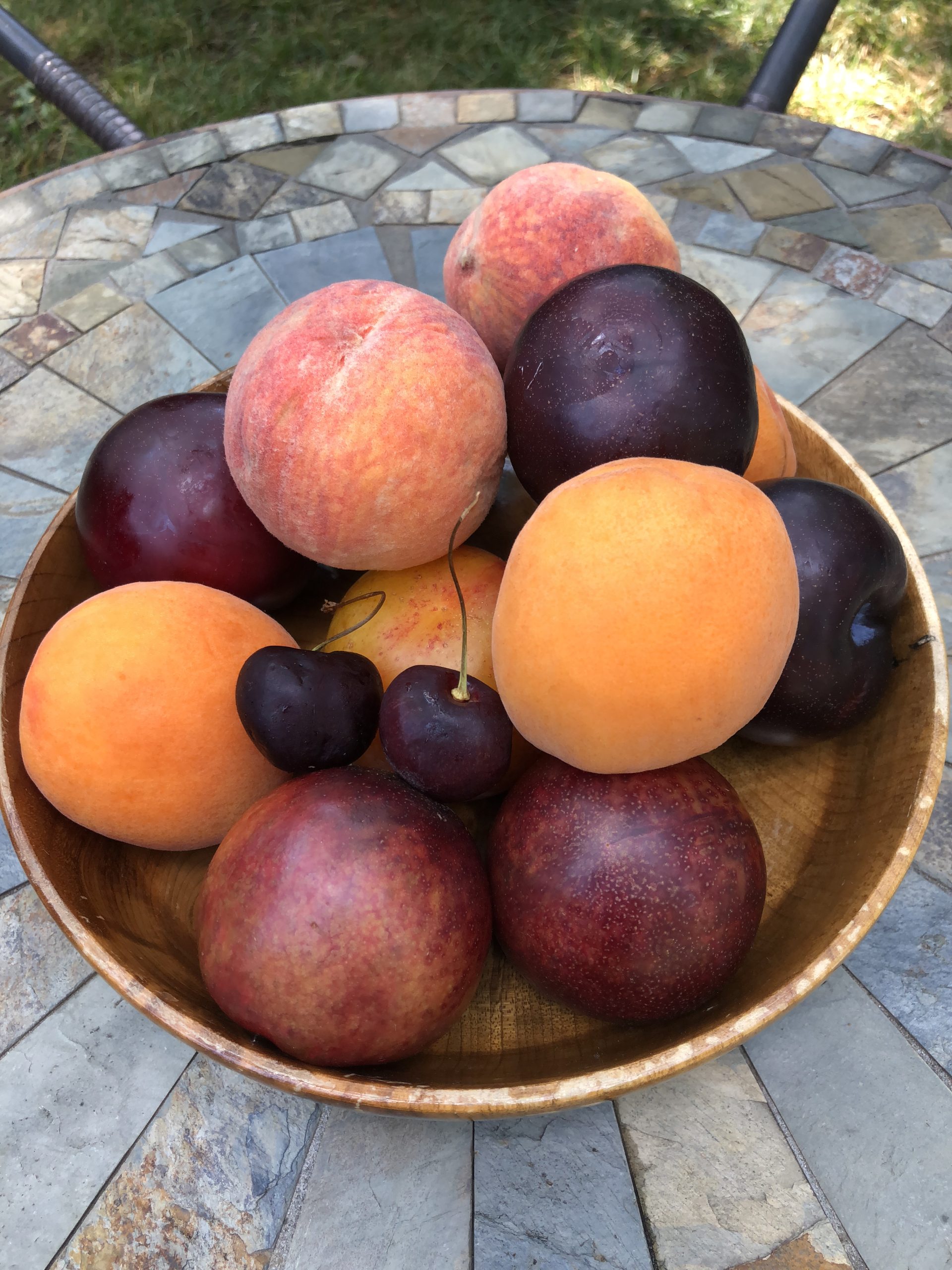
A devastating April freeze wiped out the entire tree-fruit crop at some Delta County orchards, leaving longtime Boulder Farmers Market vendors without their usual fruit this fall.
Shoppers making their late-summer and fall trips to the Boulder Farmers Market may notice something missing from some longtime Western Slope vendors: boxes overflowing with Colorado apples, pears, peaches and other tree fruit.
For Ela Family Farms, a certified organic orchard near Hotchkiss in Delta County, the absence traces back to a single night in April.
The farm lost its entire 2026 tree-fruit crop after temperatures plunged into the low 20s on April 17, following an unusually warm period that had pushed fruit trees into bloom weeks ahead of normal. The losses included peaches, pears, apples, cherries and plums.
“We have a zero percent crop this year. We lost everything,” Jeni Nagle, Ela Family Farms’ Front Range manager, told Denver7.
Workers stayed up through the freezing night running wind machines designed to mix warmer air above the orchard with colder air near the ground, but the cold lasted too long for those measures to save the young fruit.
The result is now visible hundreds of miles away at Front Range farmers markets, where Western Slope orchards have long supplied locally grown tree fruit.
Ela Family Farms is a regular vendor with Boulder County Farmers Markets and has historically offered fruit shares for pickup at both the Boulder and Longmont markets. A standard share advertised through Boulder County Farmers Markets included more than 90 pounds of peaches, pears, plums, apples and heirloom tomatoes over a 14-week harvest season.
The farm has not disappeared entirely from markets this year. According to Ela Family Farms, the operation has limited its 2026 farmers market schedule while selling products made from earlier harvests, including applesauce, pear sauce, fruit butter, jams and dried and freeze-dried fruit. Its heirloom tomatoes were not yet planted when the April freeze occurred and survived the event.
That ability to fall back on preserved products reflects a longstanding practice at the farm. Ela describes itself as a zero-food-waste operation, turning fruit unsuitable for fresh retail into processed products rather than discarding it. The family’s Colorado agricultural history dates to 1907, when its ancestors began growing fruit near Grand Junction.
The April 17 freeze devastated much of the North Fork Valley around Hotchkiss and Paonia. The Colorado Sun reported in July that many growers suffered complete losses, including First Fruits Organic Farms, which had no cherries, plums, peaches, nectarines, pears, apricots or apples to harvest across roughly 140 acres. First Fruits is also listed as a Boulder County Farmers Markets producer.
The North Fork Valley accounts for an estimated 10% of Colorado’s overall fruit harvest but has an outsized presence among smaller organic farms that supply farmers markets, community-supported agriculture programs, retailers and wholesalers across the Front Range and Western Slope.
However, the damage did not wipe out Colorado’s entire fruit crop.
Orchards around Palisade and the Grand Valley weathered the April freeze substantially better. A May assessment reported by The Colorado Sun estimated that 80% to 90% of the peach crop around Palisade survived, helping maintain supplies even as North Fork Valley growers lost virtually everything.
Current U.S. Department of Agriculture data project Colorado’s 2026 peach production at about 11,000 tons. That is down roughly 20% from the 13,750 tons produced in 2025, according to USDA’s National Agricultural Statistics Service. Colorado’s utilized peach crop was worth nearly $35.8 million last year.
The freeze followed an unusually warm start to the year that left fruit especially vulnerable when cold weather returned.
The High Plains Regional Climate Center reported that Colorado was experiencing an exceptionally warm January-through-April period in 2026. Warm conditions can push fruit trees out of winter dormancy earlier, exposing blossoms and young fruit to greater damage when temperatures subsequently plunge. By the time the April freeze arrived, growers in Delta County reported fruit developing two to three weeks ahead of normal.
Drought added another layer of stress. By the end of April, the entire state was classified in at least moderate drought, according to the High Plains Regional Climate Center, with nearly 18% of Colorado under exceptional drought conditions.
For growers whose fruit died in April, losing the harvest did not eliminate the year’s expenses. Orchards still require irrigation, pruning, fertilization, pest control and other maintenance to keep trees healthy enough to produce again in 2027. Farmers also must preserve relationships with customers, markets and wholesale buyers during a season when they have little or nothing to sell.
At Boulder Farmers Market, officials say vendors sidelined by the freeze will not lose their place because they missed a season.
Katie MacKinnon, a marketing specialist for Boulder County Farmers Markets, told Denver7 that farms unable to participate because they had no crop will be welcomed back when production returns.
The market itself remains active well into the fall, continuing through November 21, while Wednesday markets run through October 7.
Ela Family Farms says its trees survived the freeze and appear healthy, meaning the loss is confined to this year’s fruit rather than the orchards themselves.
For the farm, that shifts attention toward next spring and another cycle of blossoms, weather forecasts and nights spent watching temperatures.
If conditions cooperate, the fruit boxes absent from Boulder this fall could return in 2027.