NOAA gives a 61% likelihood that El Niño conditions will emerge between May and July
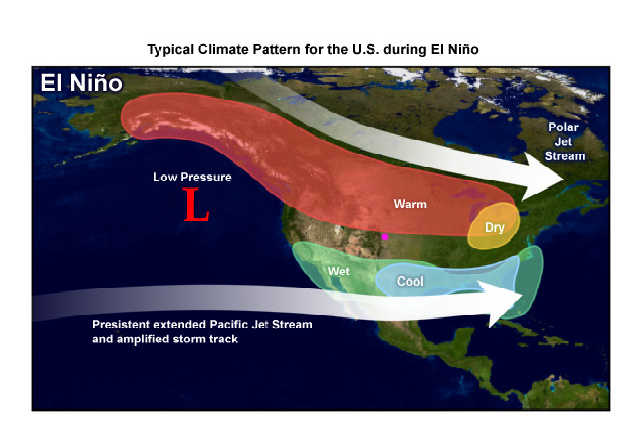
La Niña conditions officially ended on April 9 into ENSO-neutral with El Niño conditions expected by the end of summer and a possibility of a super El Niño by the end of the year. Colorado continues to face a significant drought heading into the growing season where snowpack is at 19-26% of normal and the lowest on record in the modern era. El Niño conditions typically bring more precipitation to Colorado and super El Niño conditions could bring significantly more snowfall to the region for next winter.
Boulder CAST meteorologists reported that the hype regarding a potential El Niño event later this year comes from one European model that has a history of predicting conditions that are too hot, especially when the model is initiated in the spring transition period. They said the super El Niño narrative is “premature and overblown.”
The National Oceanic and Atmospheric Administration (NOAA) gives a 61% likelihood that El Niño conditions will emerge between May and July and persist through the end of 2026. NOAA said there is a 25% chance of super El Niño this year, which is dependent upon “the continuation of westerly wind anomalies across the equatorial Pacific throughout the Northern Hemisphere summer months, which is not assured.”
Boulder CAST reports that El Niño conditions will almost certainly develop by late summer in time to experience a wetter monsoon season, which typically is stronger in July and August. They warn that the beginning of monsoon season typically has large amounts of dry lightning with minimal amounts of rain. With historic low snowpack and severe drought conditions across the state, this could be a prolific wildfire season before the El Niño conditions provide moisture in late summer.
Boulder CAST notes there is a spring predictability barrier so no conditions are guaranteed. While El Niño conditions are likely to come and bring more moisture by the end of summer and into the winter, there could be a dangerous wildfire season approaching as early summer approaches.