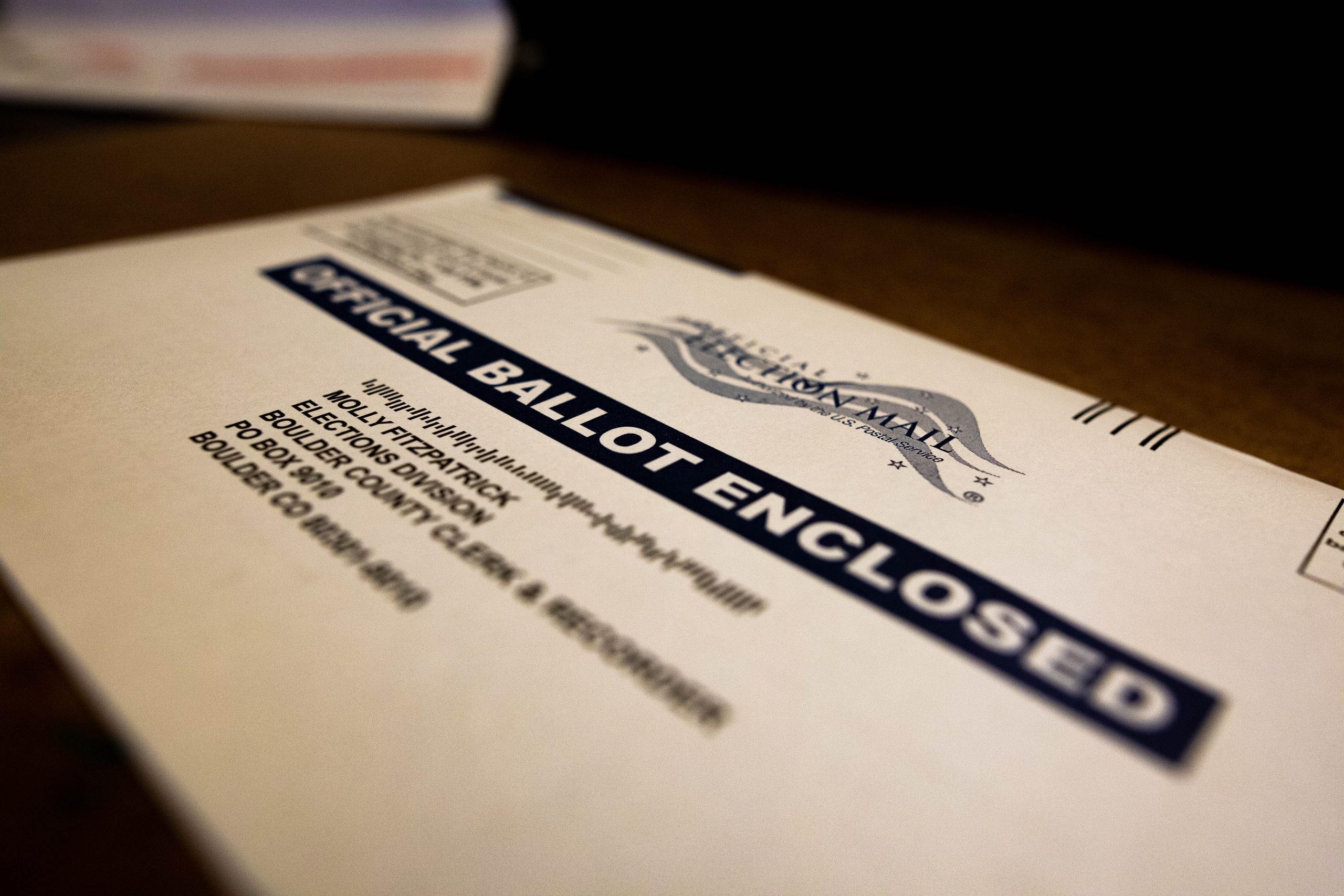
These bills will have no impact on primary elections this summer, but will take effect for November’s midterm elections
A pair of election-related bills have passed the legislature and are headed to Governor Polis’ desk. House Bill 1113 would allow county clerks to start mailing election ballots 29 days before November elections, which is one-week extension from the current law of 22 days. All ballots must be mailed out by 25 days before the election, which is up from the current law of 18 days. The law is intended to protect against potential postal delays and ballot-printing errors.
House Bill 1113 also gives the state governor the power to declare a “disaster emergency” if there is a major election disruption. The governor would work with the Secretary of State to create an advisory group to create temporary voting rules so the election can still be completed. The bill also reverses a law that allowed any registered Colorado voter to challenge the voting registration of another individual. The original rule was intended to safeguard against voting fraud, but county clerks reportedly were flooded with frivolous challenges that all needed to be investigated.
College students must receive notices about upcoming elections from their universities, including instructions on how to vote. Individuals who have been charged with election-related crimes or serious crimes like sedition, insurrection, treason, or conspiracy to overthrow the government, will no longer be eligible to serve as election watchers if Governor Polis signs this bill into law.
House Bill 1084 also goes to the desk of Governor Polis for consideration. If signed, citizen-led initiatives that don’t have a dedicated funding source will have a disclosure in the state ballot guide known as the “blue book.” The disclosure will explain how the passage of the measure may lead to cuts for Medicaid, K-12 education, and higher education.
There is at least one potential ballot measure that would contain this disclosure if Polis signs the bill into law and the initiative receives enough signatures. Initiative 175 would create a constitutional amendment to protect funding for road construction.
These bills will have no impact on primary elections this summer, but will take effect for November’s midterm elections.