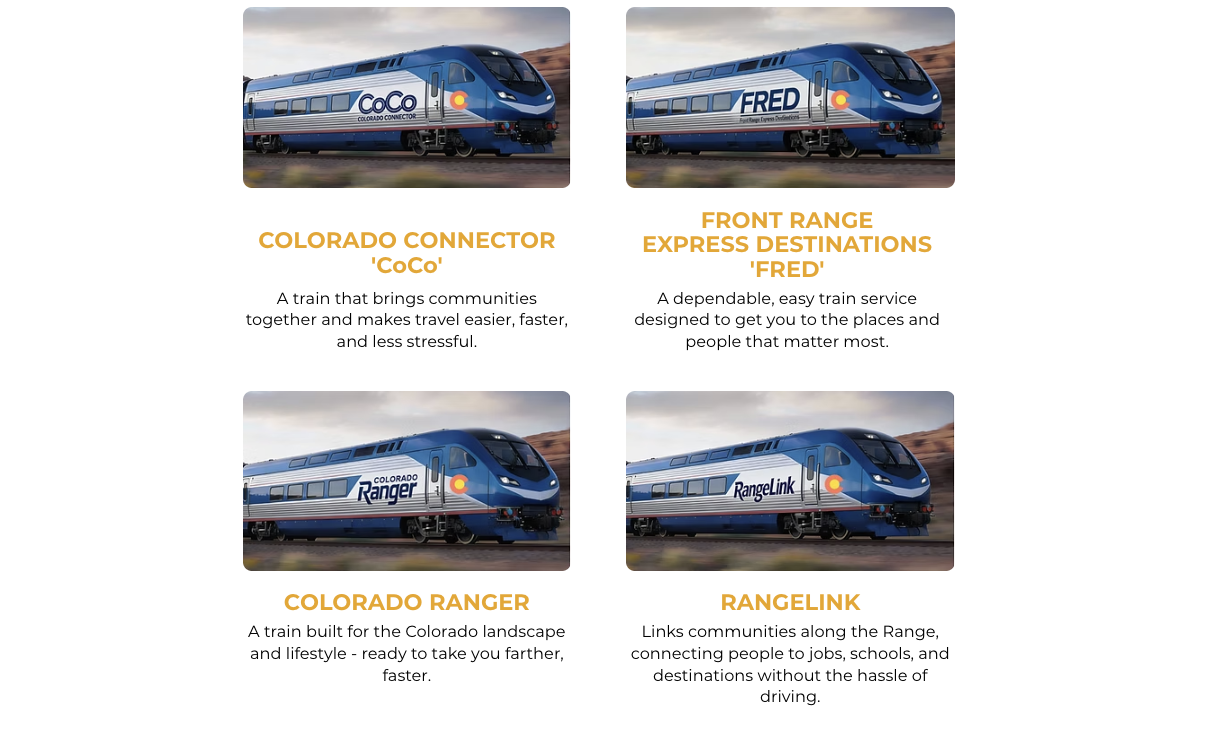
Colorado residents are being asked to help name a future passenger rail service that could eventually connect Longmont and other Front Range communities with cities from Fort Collins to Pueblo.
The Front Range Passenger Rail District launched a public voting campaign this week asking residents to select one of four finalist names for the proposed train system: Colorado Connector, Colorado Ranger, Front Range Express Destinations, or RangeLink.
Officials said roughly 100 names were submitted during the early stages of the naming effort before the list was narrowed to four finalists after review for trademark conflicts and other issues.
Voting is open through March 23, and participants will be entered into a drawing for tickets on the train’s planned inaugural ride.
The naming campaign comes as the Front Range Passenger Rail District continues planning for the long-discussed intercity rail line that would run along the Interstate 25 corridor. The proposed route would stretch roughly 173 miles from Fort Collins in northern Colorado to Pueblo in the south, with intermediate stops expected in cities such as Loveland, Longmont, Boulder-area communities, Denver and Colorado Springs.
The rail system is intended to provide an alternative to driving along the increasingly congested I-25 corridor, which serves as the main north–south transportation route through Colorado’s Front Range population centers.
Sal Pace, general manager of the Front Range Passenger Rail District, said the goal is to create a service that offers travelers a more comfortable and efficient way to move between cities.
“We see this as an opportunity for getting off I-25,” Pace said during a news conference announcing the naming campaign.
Project leaders say trains would likely operate on existing freight rail tracks owned by major rail companies such as Union Pacific and BNSF rather than requiring entirely new rail infrastructure. That approach could allow the service to launch sooner and reduce construction costs.
Initial service could begin as early as 2029 if funding and agreements with freight railroads are secured.
Officials estimate the full project could cost up to about $3.5 billion depending on final design and infrastructure needs.
To pay for construction and operations, the rail district is considering asking voters across the Front Range to approve a regional sales tax increase of up to one-half cent. A decision on whether to place that measure on the November ballot is expected later this year.
The district was created by the Colorado legislature in 2021 to coordinate planning, funding and construction of the passenger rail system.
Planning efforts currently include development of a comprehensive service development plan that will determine routes, station locations, operating schedules and costs for the future system.
For northern Front Range communities such as Longmont, the proposed rail line could offer a new regional transportation option linking residents with employment centers in Denver, Boulder and Colorado Springs while also supporting tourism and regional travel.
Project planners say the rail system could eventually operate multiple daily round trips along the corridor, with long-term plans envisioning expanded service over several decades.
If completed, the passenger rail line would represent the first intercity rail service along Colorado’s Front Range in decades and could become the backbone of a larger regional transit network connecting multiple transportation systems.