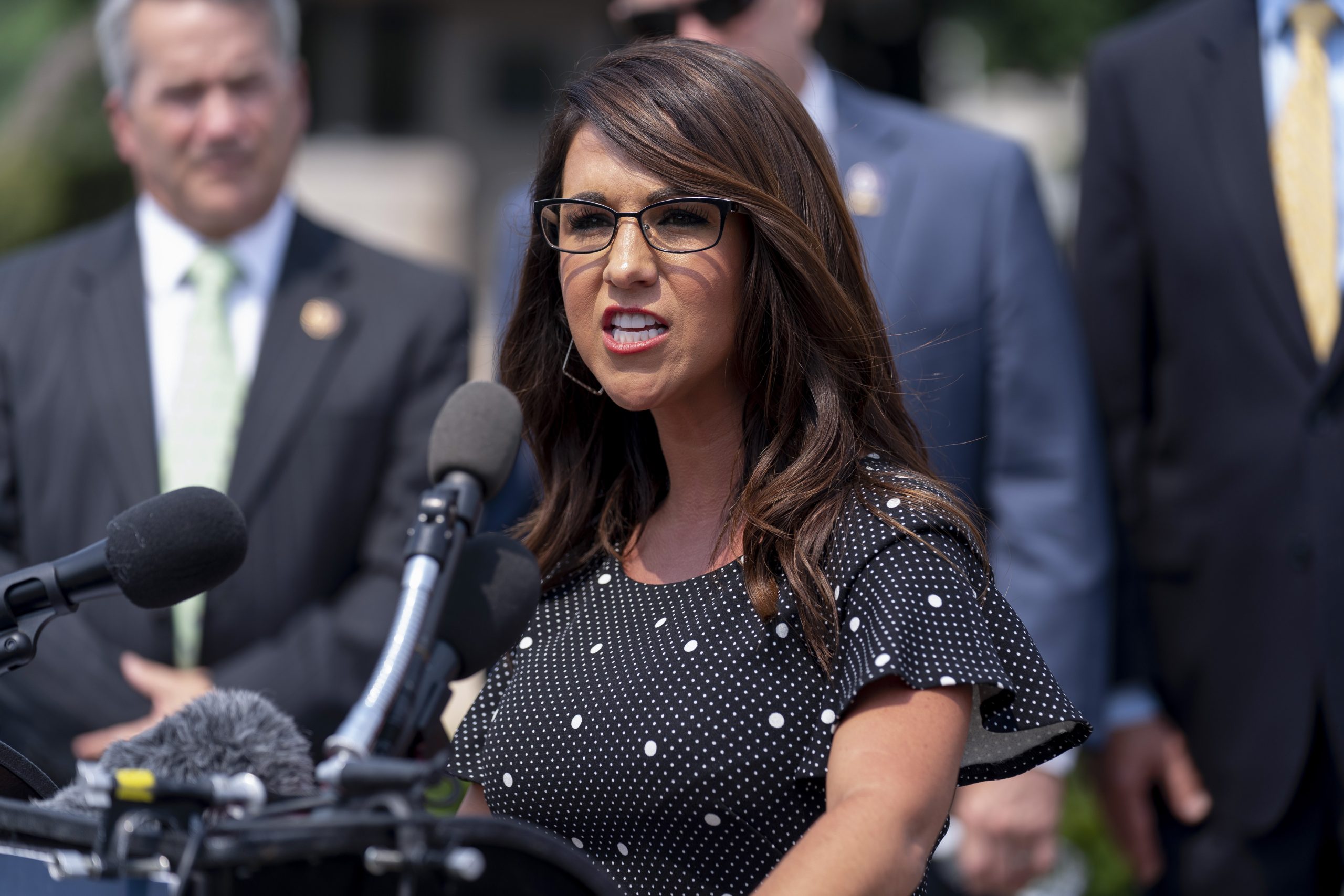
“They’ve built a massive surveillance machine that tracks, scans, and spies on law-abiding Americans without a warrant, without probable cause, and without any accountability. Enough is enough."
Colorado’s 4th Congressional Representative Lauren Boebert alongside Kentucky Rep Thomas Massie introduced the Surveillance Accountability Act on Thursday, which would require federal and local government agencies to obtain a warrant supported by probable cause before surveilling American citizens. The bill would also apply restrictions on warrantless facial recognition scanning and the creation of persistent location databases of citizens with data from automated license plate readers.
“For years, the federal government has treated the Fourth Amendment like a suggestion,” said Rep Boebert. “They’ve built a massive surveillance machine that tracks, scans, and spies on law-abiding Americans without a warrant, without probable cause, and without any accountability. Enough is enough. The Surveillance Accountability Act puts the Constitution back in charge. It protects every American from an out-of-control federal government that thinks it owns your data, your movements, and your life. This is a true bipartisan issue for anyone who still believes in limited government and individual liberty.”
Sponsors of the act documented instances where government agencies have surveilled political figures, journalists, and ordinary citizens without proper judicial authorization. A report by the Brennan Center of Justice notes several abuses of Section 702 by FBI agents. This includes searches of communications of protesters “across the political spectrum,” such as congressional members and staff, a state court judge, and 19,000 donors to a political campaign. There are also documented “backdoor” searches of women on dating apps, which is argued to be a violation of civil liberties and constitutional rights.
"The Bill of Rights is not a suggestion, and Fourth Amendment protections against warrantless searches conducted by the government are not optional," said Rep. Massie. "The Surveillance Accountability Act requires government employees to first obtain a warrant based on probable cause before searching Americans' personal information even if the information sought is stored on a phone, in the cloud, or held by a third party. Warrantless searches are unconstitutional, and this does not change when the data the government seeks is in digital formats or held by a third party."
Local police agencies, including Boulder and Longmont, have received criticism for deploying Flock cameras for privacy reasons. The Boulder Police Department shared the flock data with a national network accessible by federal agencies for three years, including Immigrations and Customs Enforcement (ICE), but stopped the practice in 2025. Longmont recently voted to end its contract with Flock in favor of Axon. Boulder has temporarily renewed its contract with Flock while it considers other options.
The Surveillance Accountability Act would effectively stop the national sharing of this data from local departments with federal agencies without a proper warrant. Federal agencies would also be prohibited from purchasing commercially available location or movement data to circumvent warrant requirements.
Colorado’s 4th Congressional Representative Lauren Boebert alongside Kentucky Rep Thomas Massie introduced the Surveillance Accountability Act on Thursday, which would require federal and local government agencies to obtain a warrant supported by probable cause before surveilling American citizens. The bill would also apply restrictions on warrantless facial recognition scanning and the creation of persistent location databases of citizens with data from automated license plate readers.
“For years, the federal government has treated the Fourth Amendment like a suggestion,” said Rep Boebert. “They’ve built a massive surveillance machine that tracks, scans, and spies on law-abiding Americans without a warrant, without probable cause, and without any accountability. Enough is enough. The Surveillance Accountability Act puts the Constitution back in charge. It protects every American from an out-of-control federal government that thinks it owns your data, your movements, and your life. This is a true bipartisan issue for anyone who still believes in limited government and individual liberty.”
Sponsors of the act documented instances where government agencies have surveilled political figures, journalists, and ordinary citizens without proper judicial authorization. A report by the Brennan Center of Justice notes several abuses of Section 702 by FBI agents. This includes searches of communications of protesters “across the political spectrum,” such as congressional members and staff, a state court judge, and 19,000 donors to a political campaign. There are also documented “backdoor” searches of women on dating apps, which is argued to be a violation of civil liberties and constitutional rights.
“The Bill of Rights is not a suggestion, and Fourth Amendment protections against warrantless searches conducted by the government are not optional,” said Rep. Massie. “The Surveillance Accountability Act requires government employees to first obtain a warrant based on probable cause before searching Americans’ personal information even if the information sought is stored on a phone, in the cloud, or held by a third party. Warrantless searches are unconstitutional, and this does not change when the data the government seeks is in digital formats or held by a third party.”
Local police agencies, including Boulder and Longmont, have received criticism for deploying Flock cameras for privacy reasons. The Boulder Police Department shared the flock data with a national network accessible by federal agencies for three years, including Immigrations and Customs Enforcement (ICE), but stopped the practice in 2025. Longmont recently voted to end its contract with Flock in favor of Axon. Boulder has temporarily renewed its contract with Flock while it considers other options.
The Surveillance Accountability Act would effectively stop the national sharing of this data from local departments with federal agencies without a proper warrant. Federal agencies would also be prohibited from purchasing commercially available location or movement data to circumvent warrant requirements.