Commissioners discussed a proposal to reshape the county's Affordable and Attainable Housing Innovation Fund
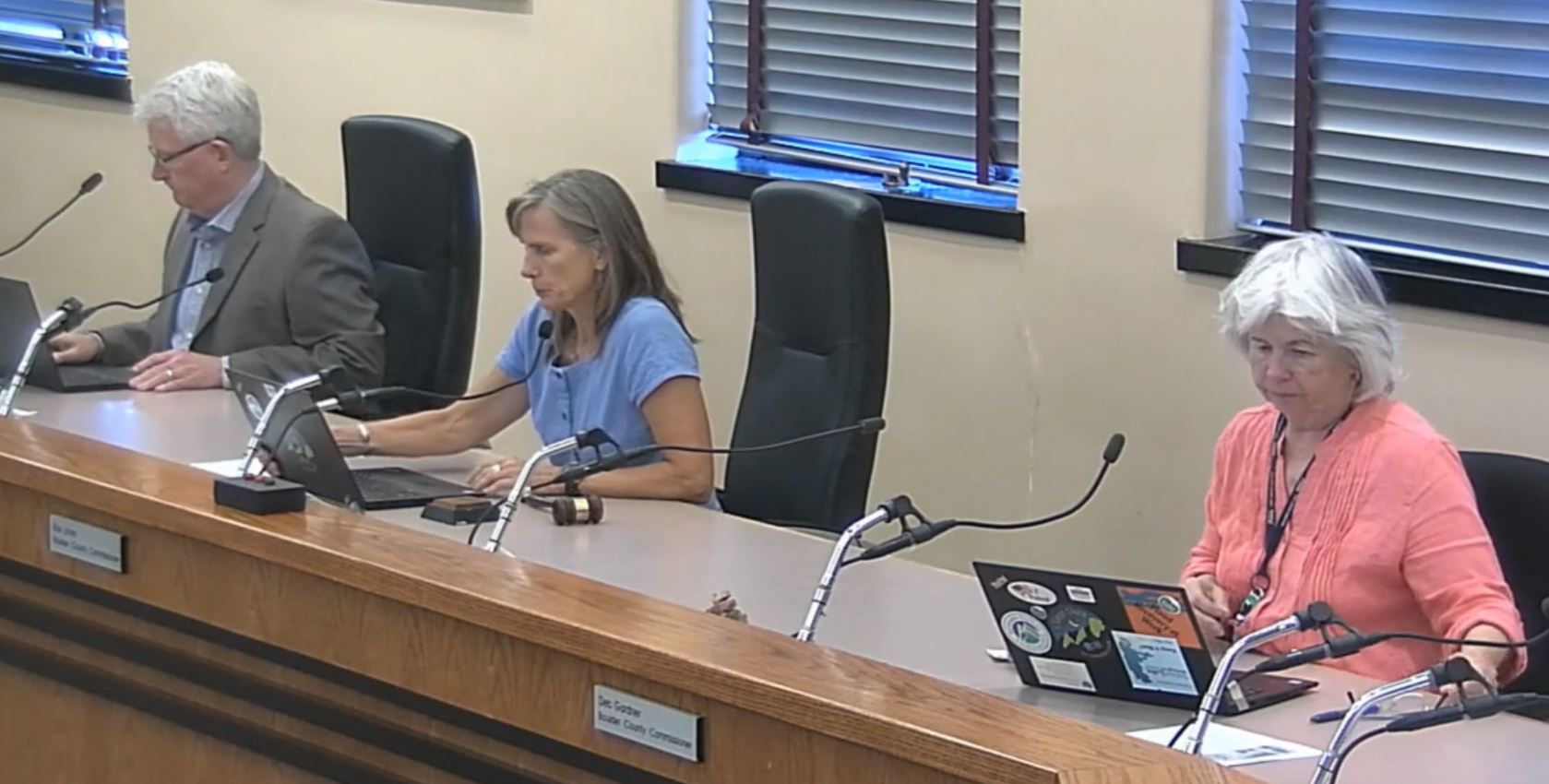
Boulder County commissioners discussed a proposal August 11, to reshape the county's Affordable and Attainable Housing Innovation Fund around homeownership assistance for public-sector workers. The idea grew out of a June work session in which commissioners directed housing staff to develop a program aimed specifically at helping people who work in public service buy homes.
The county has not yet published final eligibility rules or a launch date, and the August 11 discussion was held as a work session.
Still, the direction represents a notable shift in how Boulder County is thinking about affordable housing.
Most government housing programs are associated with subsidized apartments, homelessness prevention, or deeply affordable housing. This proposal would focus instead on workers who may earn too much to qualify for many traditional housing programs but still cannot afford the county's home prices.
That group could include teachers, firefighters, law enforcement personnel, municipal employees and other public-sector workers.
The problem becomes clear when local salaries run into local real estate prices.
As of July, the median listing price for a home across Boulder County was about $799,500. The differences within the county are significant. July data put the median listing price at about $1.075 million in Boulder, $699,500 in Lafayette and $597,000 in Longmont.
Even when a household can afford the monthly mortgage payment, producing a down payment on a home worth $600,000 or $800,000 can become another barrier.
That is the gap Boulder County wants to address.
The money would come from the county's Affordable and Attainable Housing Tax, a 0.185% sales and use tax extension approved by 71% of voters in 2023. The tax began its new 15-year term in January 2025 and can be used to build, repair and preserve affordable housing, support housing stability and expand options for local workers.
It generated about $16.7 million in its first year.
The county announced in 2024 that approximately $9.7 million would go toward affordable-housing development, $5 million toward services intended to help residents remain housed and $500,000 toward an experimental Housing Innovation Fund.
The first version of that Innovation Fund did not go as planned.
Fourteen nonprofits and local governments applied for the $500,000 in grants, proposing projects ranging from housing services to affordable-homeownership programs. Boulder County ultimately rejected all of them, saying the proposals did not meet the standard of innovation officials were looking for.
Commissioners subsequently began reconsidering what the fund should do.
By June, they had directed county staff toward a more specific mission: helping public-sector workers become homeowners.
The proposal comes as Boulder County is already putting some of its new sales-tax money into homeownership rather than rental housing.
The county's first announced Affordable and Attainable Housing Tax award provides $750,000 to help preserve two homes in Lafayette as permanently affordable ownership opportunities. Boulder County is working with the cities of Lafayette and Boulder to purchase and renovate the properties.
In planning documents, Boulder County has estimated that about 18,000 homes need to be affordable to low- and middle-income households for the county to maintain a more economically diverse population. Only about 6,000 homes met that definition at the time of the analysis.
The county has also previously reported that more than 28,000 households were housing cost-burdened, generally meaning they spent more than 30% of their income on housing.
Commuting is also a factor. A firefighter can commute into Boulder County from Weld County. A teacher can live outside the school district where they work. A municipal employee can remain a renter for years because saving enough money for a down payment is difficult even with a steady salary.
Long commutes can make public-sector jobs less attractive and increase employee turnover. Governments and school districts can find themselves recruiting workers into communities where those workers cannot realistically afford to buy a home.
Exactly how Boulder County would intervene remains unknown.
Other governments have used down-payment assistance, low-interest or forgivable loans, shared-equity arrangements and deed restrictions that reduce the purchase price in exchange for limiting how much the home can appreciate when it is sold.
Those choices matter.
A one-time down-payment grant can help one household enter the housing market and begin building equity, but the public subsidy leaves with that buyer if the home is later sold at full market value.
A permanently affordable ownership program can recycle the benefit from one household to another, but owners typically give up some potential appreciation in exchange for buying the home below market price.
Income limits will also be important. Set them too low and many teachers, firefighters, and government employees may still earn too much to qualify. Set them too high and a relatively small pool of public money could be spread among households that might eventually have been able to purchase without assistance.
The county has not yet decided what form the program will take.
Boulder County commissioners discussed a proposal August 11, to reshape the county’s Affordable and Attainable Housing Innovation Fund around homeownership assistance for public-sector workers. The idea grew out of a June work session in which commissioners directed housing staff to develop a program aimed specifically at helping people who work in public service buy homes.
The county has not yet published final eligibility rules or a launch date, and the August 11 discussion was held as a work session.
Still, the direction represents a notable shift in how Boulder County is thinking about affordable housing.
Most government housing programs are associated with subsidized apartments, homelessness prevention, or deeply affordable housing. This proposal would focus instead on workers who may earn too much to qualify for many traditional housing programs but still cannot afford the county’s home prices.
That group could include teachers, firefighters, law enforcement personnel, municipal employees and other public-sector workers.
The problem becomes clear when local salaries run into local real estate prices.
As of July, the median listing price for a home across Boulder County was about $799,500. The differences within the county are significant. July data put the median listing price at about $1.075 million in Boulder, $699,500 in Lafayette and $597,000 in Longmont.
Even when a household can afford the monthly mortgage payment, producing a down payment on a home worth $600,000 or $800,000 can become another barrier.
That is the gap Boulder County wants to address.
The money would come from the county’s Affordable and Attainable Housing Tax, a 0.185% sales and use tax extension approved by 71% of voters in 2023. The tax began its new 15-year term in January 2025 and can be used to build, repair and preserve affordable housing, support housing stability and expand options for local workers.
It generated about $16.7 million in its first year.
The county announced in 2024 that approximately $9.7 million would go toward affordable-housing development, $5 million toward services intended to help residents remain housed and $500,000 toward an experimental Housing Innovation Fund.
The first version of that Innovation Fund did not go as planned.
Fourteen nonprofits and local governments applied for the $500,000 in grants, proposing projects ranging from housing services to affordable-homeownership programs. Boulder County ultimately rejected all of them, saying the proposals did not meet the standard of innovation officials were looking for.
Commissioners subsequently began reconsidering what the fund should do.
By June, they had directed county staff toward a more specific mission: helping public-sector workers become homeowners.
The proposal comes as Boulder County is already putting some of its new sales-tax money into homeownership rather than rental housing.
The county’s first announced Affordable and Attainable Housing Tax award provides $750,000 to help preserve two homes in Lafayette as permanently affordable ownership opportunities. Boulder County is working with the cities of Lafayette and Boulder to purchase and renovate the properties.
In planning documents, Boulder County has estimated that about 18,000 homes need to be affordable to low- and middle-income households for the county to maintain a more economically diverse population. Only about 6,000 homes met that definition at the time of the analysis.
The county has also previously reported that more than 28,000 households were housing cost-burdened, generally meaning they spent more than 30% of their income on housing.
Commuting is also a factor. A firefighter can commute into Boulder County from Weld County. A teacher can live outside the school district where they work. A municipal employee can remain a renter for years because saving enough money for a down payment is difficult even with a steady salary.
Long commutes can make public-sector jobs less attractive and increase employee turnover. Governments and school districts can find themselves recruiting workers into communities where those workers cannot realistically afford to buy a home.
Exactly how Boulder County would intervene remains unknown.
Other governments have used down-payment assistance, low-interest or forgivable loans, shared-equity arrangements and deed restrictions that reduce the purchase price in exchange for limiting how much the home can appreciate when it is sold.
Those choices matter.
A one-time down-payment grant can help one household enter the housing market and begin building equity, but the public subsidy leaves with that buyer if the home is later sold at full market value.
A permanently affordable ownership program can recycle the benefit from one household to another, but owners typically give up some potential appreciation in exchange for buying the home below market price.
Income limits will also be important. Set them too low and many teachers, firefighters, and government employees may still earn too much to qualify. Set them too high and a relatively small pool of public money could be spread among households that might eventually have been able to purchase without assistance.
The county has not yet decided what form the program will take.