The St. Vrain Valley School District’s dyslexia task force led students in multiple exercises that simulated the struggles of having dyslexia, with a goal of building empathy and inspiring more inclusivity in student leadership.
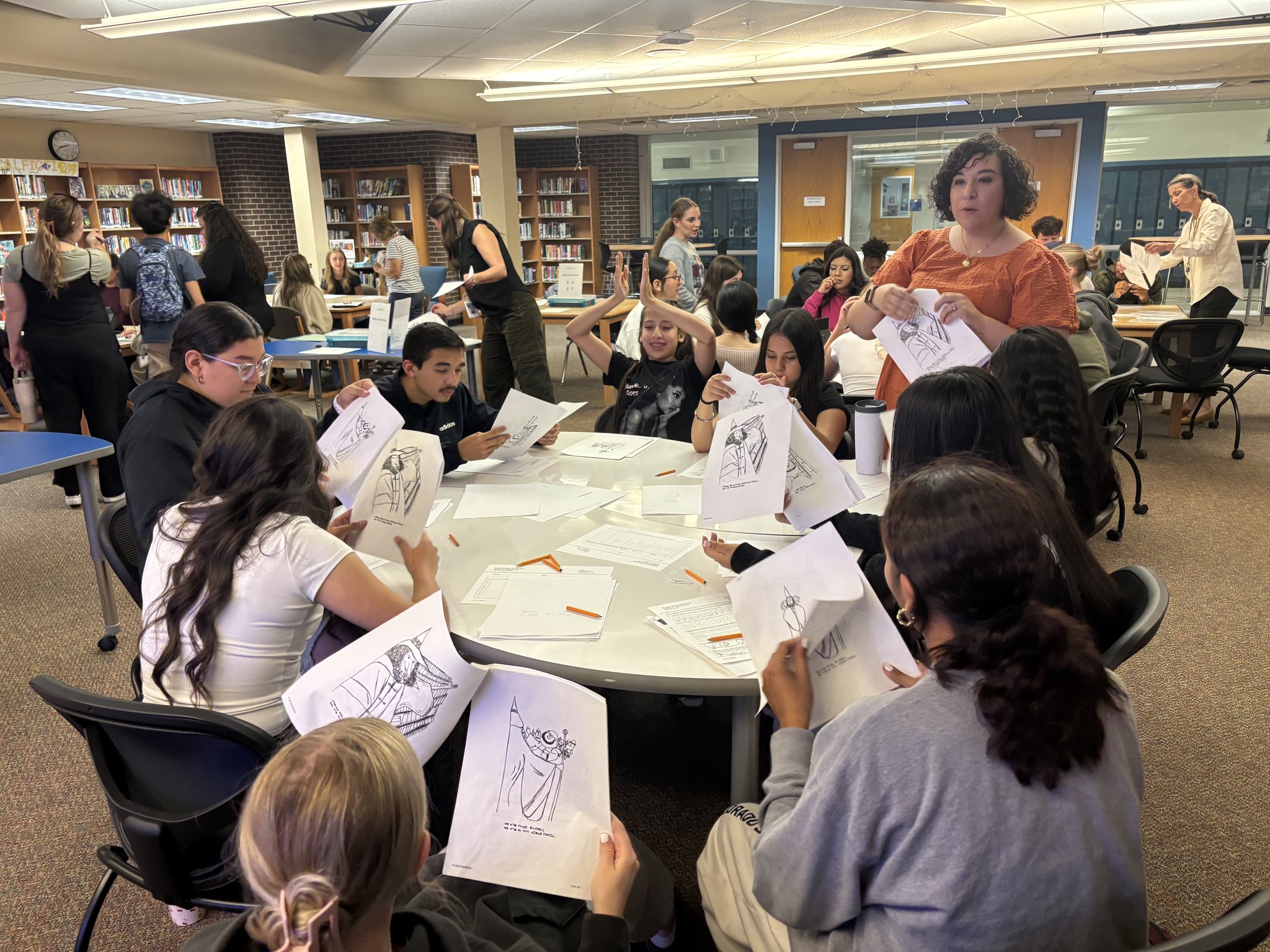
Longmont High School (LHS) student council members participated in an exercise organized by the St. Vrain Valley School District’s (SVVSD) dyslexia task force on October 2 that aimed to inspire understanding and empathy toward students with dyslexia. The exercise was described by LHS Principal Jeff McMurry as a unique opportunity for student council members to step into the shoes of students with dyslexia through an engaging simulation, which was led by SVVSD teachers who are part of the dyslexia task force.
Dyslexia is a learning disability that results in people having difficulties with specific language skills, particularly reading. The International Dyslexia Association states that dyslexia can make it difficult for students to succeed without phonics-based reading instruction, which is unavailable in most public schools.
Teachers on the dyslexia task force (led by Carolyn Storz, SVVSD’s dyslexia instructional coach), along with student council advisors/LHS teachers Aeshia Sperle and Andrea Balster, guided students through a series of whole-group and small-group activities designed to model the daily challenges of reading, writing, and spelling with dyslexia. Sperle and Balster had taken part in a similar kind of simulation at a conference this past summer and wanted to replicate the experience for their student council students.
The activities included listening and spelling activities, which were aimed to give students a “powerful perspective on the perseverance and strategies required to learn with dyslexia,” according to McMurry. The session concluded with a debrief and reflection, during which students shared insights about how the simulation shaped their understanding and empathy.
Sperle and Balster wanted to conduct this simulation with students on LHS’s student council because they wanted to expand the council’s influence beyond planning and organizing events for LHS: the pair wanted to have students learn more about becoming leaders, and what makes a strong leader.
“We want to be sure that our student council is appealing to all students within our student body,” Sperle said. “We wanted to open our student's eyes to more of our student populations and teach them the difference between sympathy and empathy, and how we can use the knowledge produced from this simulation to connect it to their roles as student leaders.”
The overarching goal, the teachers said, was for students to use their newfound understanding to make the school and its events more inclusive for all students.
“One group shared the importance of having an area at homecoming where students can unwind and relax to get a break from the dance area, which can be overstimulating due to lighting, music volume, and crowding,” Sperle said. “Leaders who empathize demonstrate the ability to identify and share in the feelings others experience, which in turn makes these student leaders more self aware and [helps them to] become more thoughtful and strategic in their decision making.”
SVVSD’s dyslexia task force supports both SVVSD students with dyslexia as well as SVVSD teachers, by guiding them through strategies to better support students who have dyslexia. The task force also runs the Yes! (Youth Examples of Self-Advocacy) Ambassadors program, which is made up of school volunteers who are currently-enrolled St. Vrain Valley School District students in middle or high school with dyslexia who speak about their learning differences, self-advocacy, and assistive technology.
Principal McMurry said that a major win of the exercise was when an LHS senior shared her story and experiences about having dyslexia with her peers.
Other members of the dyslexia task force that led this exercise for students included Liz Vela, Kathy McCall, and Brandi Ward.
Sperle and Balster said that they plan to orchestrate other exercises such as this one to continue to develop their students into stronger, more understanding leaders who can plan and organize mindful events that are inclusive to all.
“We hope that after this simulation our students are able to move through their day by leading with curiosity, and realize that every person in their classes has a unique experience, not only as being a teenager, but as a learner,” Sperle said.
Longmont High School (LHS) student council members participated in an exercise organized by the St. Vrain Valley School District’s (SVVSD) dyslexia task force on October 2 that aimed to inspire understanding and empathy toward students with dyslexia. The exercise was described by LHS Principal Jeff McMurry as a unique opportunity for student council members to step into the shoes of students with dyslexia through an engaging simulation, which was led by SVVSD teachers who are part of the dyslexia task force.
Dyslexia is a learning disability that results in people having difficulties with specific language skills, particularly reading. The International Dyslexia Association states that dyslexia can make it difficult for students to succeed without phonics-based reading instruction, which is unavailable in most public schools.
Teachers on the dyslexia task force (led by Carolyn Storz, SVVSD’s dyslexia instructional coach), along with student council advisors/LHS teachers Aeshia Sperle and Andrea Balster, guided students through a series of whole-group and small-group activities designed to model the daily challenges of reading, writing, and spelling with dyslexia. Sperle and Balster had taken part in a similar kind of simulation at a conference this past summer and wanted to replicate the experience for their student council students.
The activities included listening and spelling activities, which were aimed to give students a “powerful perspective on the perseverance and strategies required to learn with dyslexia,” according to McMurry. The session concluded with a debrief and reflection, during which students shared insights about how the simulation shaped their understanding and empathy.
Sperle and Balster wanted to conduct this simulation with students on LHS’s student council because they wanted to expand the council’s influence beyond planning and organizing events for LHS: the pair wanted to have students learn more about becoming leaders, and what makes a strong leader.
“We want to be sure that our student council is appealing to all students within our student body,” Sperle said. “We wanted to open our student’s eyes to more of our student populations and teach them the difference between sympathy and empathy, and how we can use the knowledge produced from this simulation to connect it to their roles as student leaders.”
The overarching goal, the teachers said, was for students to use their newfound understanding to make the school and its events more inclusive for all students.
“One group shared the importance of having an area at homecoming where students can unwind and relax to get a break from the dance area, which can be overstimulating due to lighting, music volume, and crowding,” Sperle said. “Leaders who empathize demonstrate the ability to identify and share in the feelings others experience, which in turn makes these student leaders more self aware and [helps them to] become more thoughtful and strategic in their decision making.”
SVVSD’s dyslexia task force supports both SVVSD students with dyslexia as well as SVVSD teachers, by guiding them through strategies to better support students who have dyslexia. The task force also runs the Yes! (Youth Examples of Self-Advocacy) Ambassadors program, which is made up of school volunteers who are currently-enrolled St. Vrain Valley School District students in middle or high school with dyslexia who speak about their learning differences, self-advocacy, and assistive technology.
Principal McMurry said that a major win of the exercise was when an LHS senior shared her story and experiences about having dyslexia with her peers.
Other members of the dyslexia task force that led this exercise for students included Liz Vela, Kathy McCall, and Brandi Ward.
Sperle and Balster said that they plan to orchestrate other exercises such as this one to continue to develop their students into stronger, more understanding leaders who can plan and organize mindful events that are inclusive to all.
“We hope that after this simulation our students are able to move through their day by leading with curiosity, and realize that every person in their classes has a unique experience, not only as being a teenager, but as a learner,” Sperle said.