The plan overview acknowledges extreme heat, longer droughts, greater fire risks, and rising energy burdens
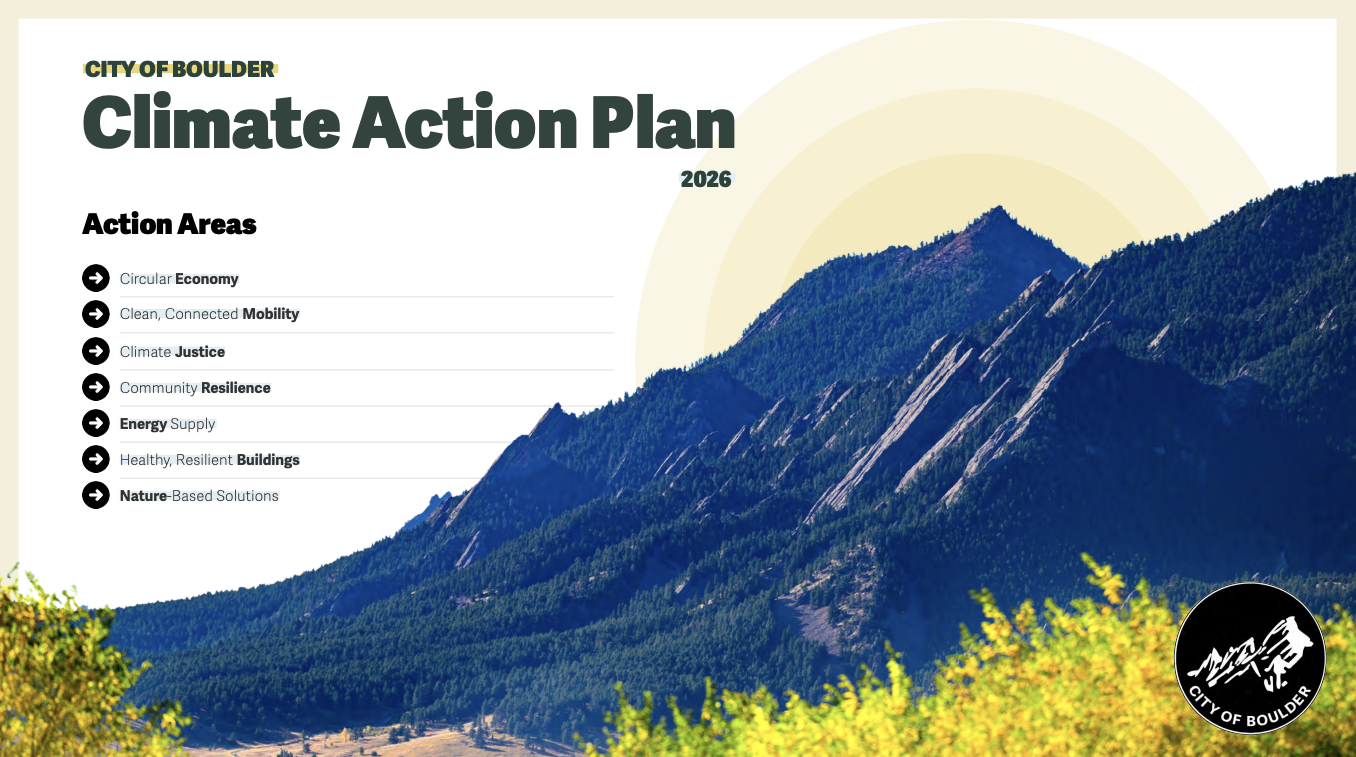
The City of Boulder updated its Climate Action Plan for the first time since 2021 with seven action areas to guide investments moving forward. The plan provides an outline for how the city plans to “reduce emissions, strengthen infrastructure resilience and invest in communities most affected by climate change.” The plan overview acknowledges extreme heat, longer droughts, greater fire risks, and rising energy burdens, while concluding “ These impacts are not future threats. They are here.”
The city achieved its 2030 renewable energy goal in 2023 with electric vehicles making up 12% of the cars registered in the city. That is six times higher than the national average. The emissions breakdown for the city shows a total of 1.17 million metric tons of climate pollution annually in the city, which is a 50% drop since 2005. Two-thirds of the emissions come from building, heating, cooling, and electricity while the other third comes from transportation and 1% comes from waste and wastewater.
The city developed a zero waste goal in 2006 to expand composting and recycling programs and there has been an 18% increase in waste diversion from 2005-2024. The city hopes to build on that progress by creating a circular economy and investing in “reuse” infrastructure. The city hopes to increase the percentage of electric vehicles to 30% by 2030 and 100% city fleet electrification. The city also will continue to invest in EV charging stations, e-buses, protected bike lanes, and transit-oriented development that reduces car dependence for commuters.
The 2024 energy code mandates full electrification for new construction. Current efforts are focused on decarbonizing the grid, affordability and retrofits to cut energy burdens while improving indoor air quality.
The plan includes nature-based solutions while pointing out that the city’s forests, grasslands, open space and soils store about 2.7 million tons of carbon and can absorb about 13,000 tons of carbon each year. The plan includes the expansion of the urban tree canopy for cooling, wildfire preparedness, and water resilience strategies.
“This moment holds real opportunity,” wrote Mayor Aaron Brocket and City Manager Nuria Rivera-Vandermyde. “The choices we make now can shape a future that is not only lower in emissions, but healthier, more affordable and more connected. Climate action can mean homes that are more comfortable and less costly to run, transportation options that are safe and convenient and more resilient neighborhoods. It is a chance to align our values with how we live every day. This is not only about avoiding what we stand to lose, but about building what we want to become.”