Denver has no shortage of things to look at. But few sights stop people mid-stride the way the Big Blue Bear does.
Standing 40 feet tall and pressing its face against the glass walls of the Colorado Convention Center, this sculpture has become one of the most photographed landmarks in the entire state. Locals love it. Visitors can’t stop talking about it. And once you’ve seen it in person, it’s easy to understand why.
Here’s everything worth knowing before heading downtown to see it.
What Is the Big Blue Bear in Colorado
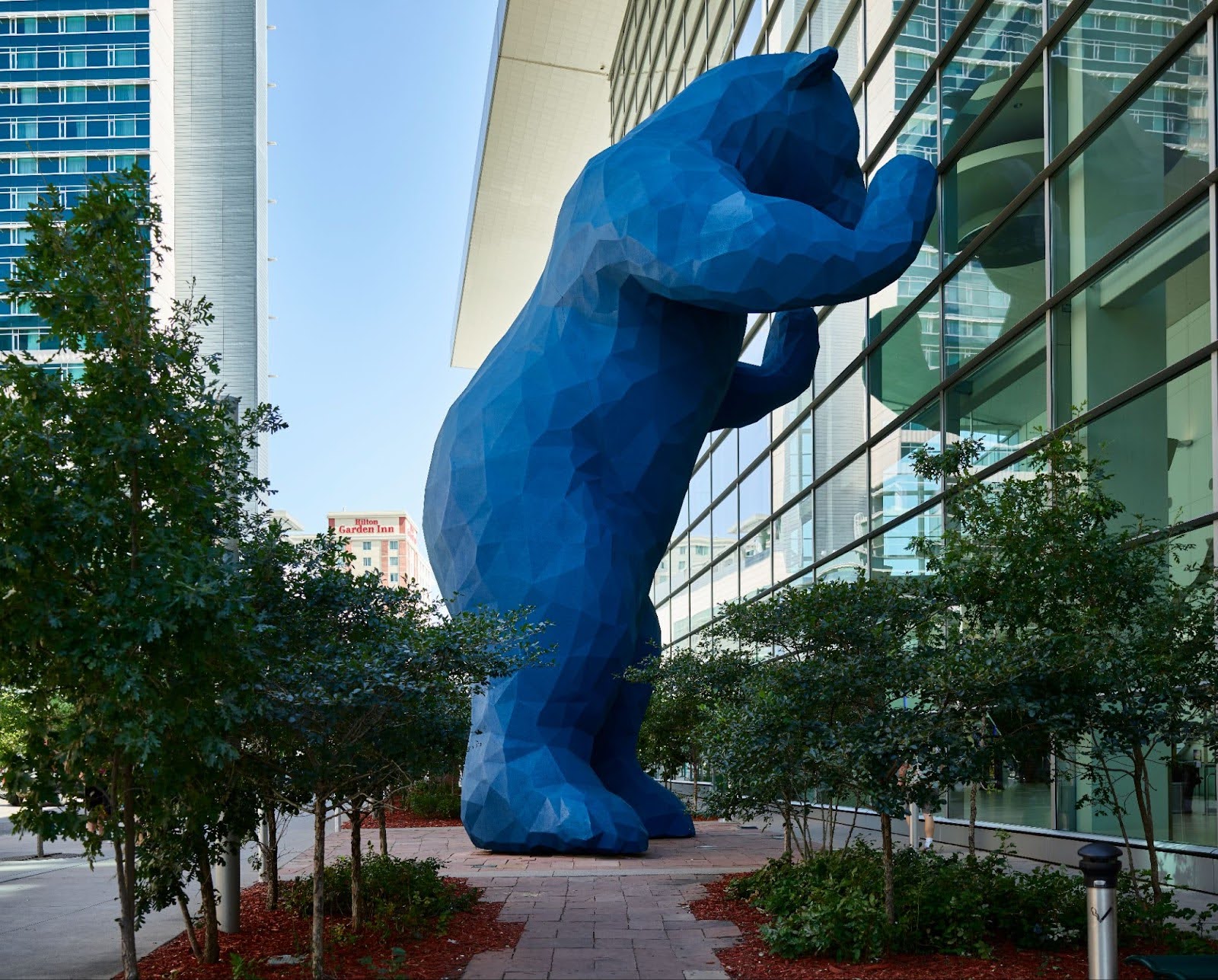
The Big Blue Bear is a massive public sculpture installed outside the Colorado Convention Center in downtown Denver. Its official title is I See What You Mean, a name chosen by its creator, Lawrence Argent, to reflect the piece’s core concept: curiosity, observation, and the tension between the natural world and human gathering spaces.
The bear stands 40 feet tall and leans forward with its nose and paws pressed against the convention center’s floor-to-ceiling glass facade. The posture is immediately readable. It looks like someone who arrived late to a party and is trying to figure out what’s happening inside.
That sense of playful inquisitiveness is exactly the point.
The sculpture is coated in a vivid blue polyurethane finish that sets it apart sharply from the surrounding steel and glass architecture. The surface itself is made up of thousands of individual triangular facets, giving it a textured, almost digital quality that catches light differently depending on where you’re standing or what time of day it is.
Where Is the Big Blue Bear in Denver
The official address is 700 14th Street, Denver, Colorado. More practically, the bear lives at the intersection of 14th and California Streets, right at the entrance to the Colorado Convention Center in the heart of downtown.
Getting there is straightforward:
- It’s within easy walking distance of the 16th Street Mall and most major downtown hotels
- Public transit runs nearby, making it accessible without a car
- Street-level pedestrian access is open throughout the day, no tickets required
Parking directly on 14th Street is limited, so using a nearby public garage is the smarter move, especially during convention events when foot traffic in the area picks up significantly.
Who Made the Big Blue Bear
Lawrence Argent, a Denver-based artist, conceived and built I See What You Mean. His approach to the project leaned heavily on technology rather than traditional sculpting methods, which is part of what makes the finished piece so distinctive.
Argent used advanced 3D modeling software to design the bear’s complex geometry and then translated that digital form into physical reality using laser-cut styrofoam blocks. Those blocks served as the structural skeleton for the final fiberglass and steel construction. The result is a sculpture that holds its precise shape from every angle, something that would be nearly impossible to achieve through conventional means at this scale.
The internal steel frame supports the entire assembly, which tips the scales at approximately 10,000 pounds. That frame is what allows the bear to lean forward in its iconic pose without toppling, even against the high winds common to Denver’s elevation.
Argent’s decision to root the project in Denver’s local identity was intentional. The design draws on the character of the Colorado landscape, and the final color connects directly to the region’s visual and mineral history. More on that below.
Why the Sculpture Is Called I See What You Mean
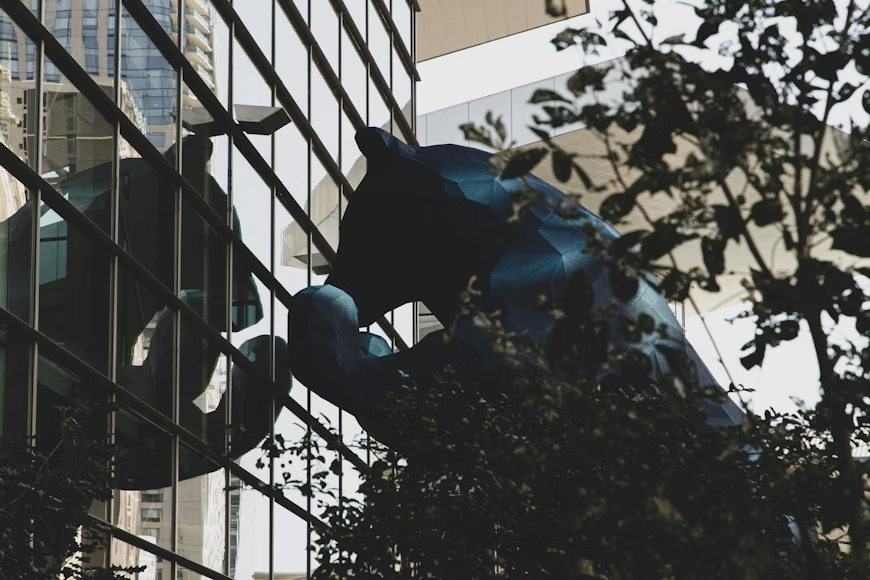
Photo by LOGAN WEAVER | @LGNWVR on Unsplash
The title comes from the concept Argent built the entire piece around: the experience of being an outsider looking in on an exchange of ideas.
His initial inspiration came from a newspaper photograph of a black bear entering someone’s home, a moment of unexpected overlap between the natural world and domestic human space. That image sparked the idea of transposing the same dynamic onto an urban setting, with the convention center as the stage and the bear as the curious visitor peering in on human activity from the outside.
The name I See What You Mean captures that exchange perfectly. Conventions are spaces where people gather to share, debate, and transfer ideas. The bear watches all of it from the other side of the glass.
As for the blue? That was a happy accident.
During the prototyping phase, a 3D-printed model came out with an unexpected blue tint due to a printing error. Argent immediately recognized it as better than his original plan for natural Colorado stone colors. The blue hue he ultimately chose references both the expansive Colorado sky and the region’s lapis lazuli stone, grounding the contemporary design in local identity without being heavy-handed about it.
Why the Big Blue Bear Became a Denver Icon
The sculpture was installed in June 2005 as part of an expansion of the Colorado Convention Center, commissioned through Denver’s Public Art Program. The goal was to use public art to elevate the facility’s appeal and give the space a three-dimensional identity.
What nobody fully anticipated was how quickly the bear would become the anchor of the entire downtown visual experience.
A few things worked in its favor:
- Scale. At 40 feet, it commands attention from blocks away. The size transforms what could have been a conventional art installation into a genuine landmark.
- Personality. The posture is warm and legible. People relate to it immediately, which is rare for large-scale public sculpture.
- Photography. The faceted blue surface and the dramatic backdrop of the convention center’s glass facade create compelling images in almost any light. Interior shots from inside the lobby, looking out at the bear’s face, are equally striking.
- Accessibility. It’s free, it’s outdoors, and it’s always there. No tickets, no hours, no barriers.
The combination turned it into one of the most photographed spots in the Denver metropolitan area. A restoration project in 2013 addressed surface cracking and fading caused by Colorado’s intense UV exposure at altitude, restoring the bear’s color to its original vividness.
Tips for Visiting and Taking Photos

Photo by Kelly Sikkema on Unsplash
The bear looks great at almost any time of day, but a few conditions produce especially strong results.
Best times to visit:
- Golden hour (the hour after sunrise or before sunset) is when the shifting light plays most dramatically across the faceted surface. The geometry becomes more pronounced, and the blue deepens beautifully.
- Midday on clear days works well for crisp, high-contrast shots of the blue against the building’s glass.
- Overcast days soften the light and reduce glare, which can actually be ideal for detail shots of the surface texture.
Angles worth trying:
- Street level at the bear’s feet gives the full sense of scale.
- Stepping back to frame the bear against the building captures the interplay between the sculpture and the glass facade.
- From inside the convention center lobby, looking outward, offers the bear’s-eye-view in reverse.
Practical notes:
- Pedestrian traffic is high during convention events; allow extra time if the goal is a clean shot.
- Bring layers, Denver weather shifts quickly and outdoor sessions can run long.
- The sculpture is free to visit with no time restrictions.
What to See Near the Big Blue Bear
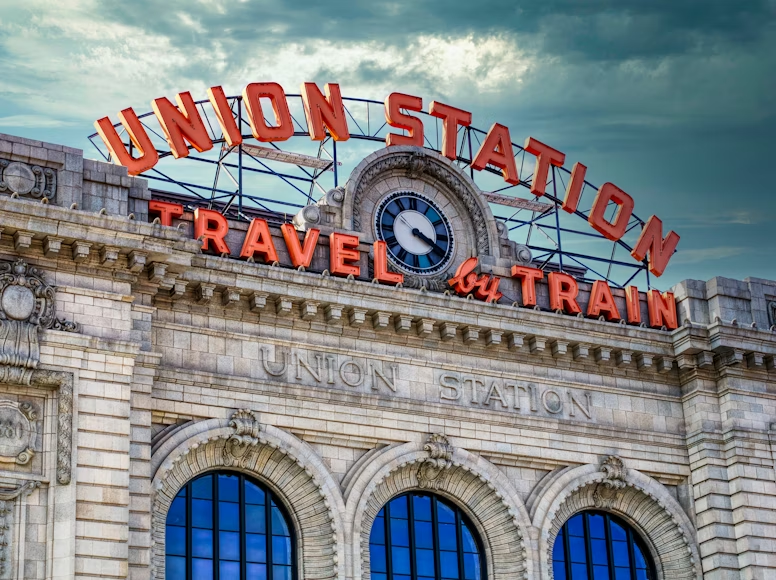
Photo by John Wiggains on Unsplash
The convention center location puts visitors right in the middle of one of Denver’s most walkable stretches. A few things worth knowing about the surrounding area:
- 16th Street Mall is a short walk away and connects to a long corridor of shops, restaurants, and transit options
- Civic Center Park sits nearby and connects to the Denver Art Museum and the History Colorado Center
- Larimer Square, one of Denver’s most distinctive dining and nightlife blocks, is within easy walking distance
- Union Station, the city’s beautifully restored transit hub and social gathering space, is reachable on foot
Denver’s botanical scene is also worth building into the trip, and the Denver Botanic Gardens offers a completely different but equally rewarding side of the city, easy to pair with the bear into a single full day downtown.
Big Blue Bear Facts at a Glance
|
Detail |
Information |
|
Official title |
I See What You Mean |
|
Artist |
Lawrence Argent |
|
Height |
40 feet |
|
Weight |
Approximately 10,000 pounds |
|
Installation year |
June 2005 |
|
Location |
700 14th Street, Denver, CO |
|
Materials |
Fiberglass, steel, polyurethane coating |
|
Surface |
Approximately 4,000 triangular facets |
|
Cost to visit |
Free |
|
Hours |
Accessible outdoors at all times |
Frequently Asked Questions
What is the Big Blue Bear in Denver called?
The official title is I See What You Mean, a name chosen by artist Lawrence Argent to reflect the sculpture’s central theme of curiosity and observation.
Who made the Big Blue Bear?
Lawrence Argent, a Denver-based artist, created the sculpture using 3D modeling technology, laser-cut styrofoam forms, and fiberglass construction.
Where is the Big Blue Bear located?
At 700 14th Street in downtown Denver, outside the Colorado Convention Center at the intersection of 14th and California Streets.
Is the Big Blue Bear free to visit?
Yes. The sculpture is a permanent outdoor public installation with no entry fee and no restricted hours.
How tall is the Big Blue Bear?
The sculpture stands 40 feet tall and weighs approximately 10,000 pounds.
Final Take
The Big Blue Bear earns its reputation. It’s the kind of public artwork that actually works, inviting, visually striking, full of personality, and genuinely connected to the place it inhabits. Whether the draw is photography, public art history, or just a reason to spend time downtown, the bear delivers.
Plan a visit, bring a camera, and take some time to explore the neighborhood while there. Denver’s downtown has a lot going on, and the Big Blue Bear is a perfect place to start.