Colorado has more than 180 documented waterfalls scattered across its national forests, state parks, and mountain wilderness. Narrow quartzite canyons, glacially carved ridgelines, and high-altitude snowpack combine to create some of the most dramatic cascades in the American West. And if you happen to live in or around Longmont, you are sitting in one of the best spots in the state to access them.
Whether the goal is a quick 20-minute drive to a roadside splash or a full-day adventure into Rocky Mountain National Park (RMNP), there are options for every fitness level, every season, and every mood. Here is where to start.
Waterfalls Near Longmont: Your Local Starting Point
This is the list that most Colorado waterfall guides skip, and it is the most useful one for Front Range locals. These are all reachable on a half-day or full-day trip without overnight prep.
|
Waterfall |
Distance from Longmont |
Difficulty |
Round Trip |
|
Boulder Falls |
~20–30 min (14–18 mi) |
Easy |
0.1–0.3 mi |
|
Alberta Falls (RMNP) |
~53 min (35–40 mi) |
Easy-Moderate |
1.6 mi |
|
Ouzel Falls (RMNP) |
~1 hr 10 min |
Moderate |
5.4–6.2 mi |
|
Adams Falls (Grand Lake) |
~1.5 hrs |
Easy |
0.6 mi |
|
Chasm Falls (Estes Park) |
~1 hr |
Easy-Moderate |
2.8 mi |
Boulder Falls
Boulder Falls sits just 11 miles up Boulder Canyon Drive and, under normal conditions, offers one of the shortest waterfall hikes in the region — as little as 0.1 miles from the parking area to the viewpoint. It drew over 260,000 visitors in 2023 alone.
Important Closure Notice: Boulder Falls has been closed indefinitely since November 2024 following a significant rockslide that damaged trail infrastructure and destabilized the surrounding canyon walls. As of early 2026, the City of Boulder is evaluating options, including relocating the viewing area or, in the worst case, permanently closing it. There is currently no timeline for reopening.
Before making the trip, check the current trail status at the official City of Boulder OSMP closures page: https://bouldercolorado.gov/services/osmp-closures
Alberta Falls (RMNP)
Alberta Falls is one of the most popular waterfall hikes in RMNP, and for good reason. The 1.6-mile round trip follows Glacier Creek through a gorgeous subalpine corridor to a 30-foot cascade framed by granite boulders. The trail gains about 160 feet in elevation, making it approachable for most hikers.
Note: Timed-entry permits are required for Bear Lake Road (where this trailhead is located) from late May through mid-October. Book in advance at recreation.gov.
Ouzel Falls (RMNP)
At 5.4 to 6.2 miles round trip with 870 feet of elevation gain, Ouzel Falls earns its place on the list through pure scenic payoff. The trail winds through the wild St. Vrain Creek corridor before opening up to views of a gorgeous cascade deep in the backcountry. Plan for a full morning or afternoon. A full overview of the park’s trail network is covered in this guide to the best hiking trails in Rocky Mountain National Park.
Adams Falls (Grand Lake)
Adams Falls is the easiest big payoff on this list. Just 0.6 miles round trip from the East Inlet Trailhead near Grand Lake, this short walk leads to a powerful cascade that rewards effort with almost no effort required. A wonderful option for families, older adults, and anyone who wants to tick off a waterfall before lunch.
Chasm Falls (Estes Park)
Located along Trail Ridge Road inside RMNP, Chasm Falls drops into a narrow gorge along Fall River at an elevation of around 9,000 feet. The 2.8-mile round-trip hike is manageable for most hikers, and the views of the churning whitewater are genuinely spectacular, especially during peak spring runoff.
Quick Facts
- Colorado’s Tallest: Bridal Veil Falls, Telluride — 365 ft free fall
- Easiest from Longmont: Adams Falls — 0.6 mi round trip, minimal elevation gain
- Best for Families: Rifle Falls — walkable, caves, triple cascade
- Best in Winter: Horsethief Falls — snowshoeing accessible, stunning ice formations
Best Waterfalls Across Colorado: A Full-State Roundup
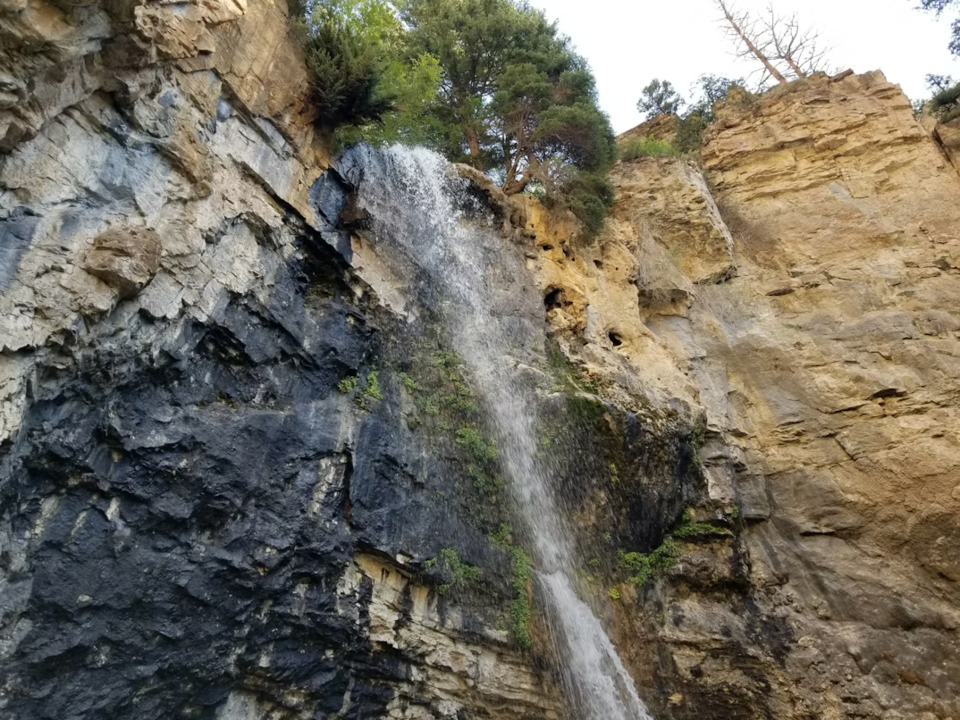
Photo by Zach Betten on Unsplash
Once the local options are explored, the wider state opens up. Here is a regional breakdown of Colorado’s most rewarding waterfall destinations.
Rocky Mountain National Park
RMNP is Colorado’s waterfall hub. Beyond Alberta, Ouzel, and Chasm Falls above, two more are worth highlighting:
- Fern Falls sits about 3.7 miles into the Fern Lake Trail, a beautiful and less-trafficked route through dense forest along Fern Creek
- Adams Falls (covered above) doubles as an RMNP entry point via Grand Lake
The park requires timed-entry reservations from May through mid-October. Make sure to book ahead at recreation.gov, especially for Bear Lake Road access. For a broader look at hiking in Colorado beyond RMNP, there is plenty more terrain worth exploring across the state.
Telluride and Ouray Region
This corner of the San Juan Mountains is arguably the most dramatic waterfall terrain in the state.
Colorado’s Tallest: Bridal Veil Falls, Telluride — 365 feet
Bridal Veil Falls holds the title of Colorado’s tallest free-falling waterfall. Dropping 365 feet off the rim of a box canyon just outside Telluride, it is a massive visual anchor for the entire valley. A permanent mist feeds unique cliff vegetation, and the view from below is one of those moments that earns the drive.
Box Canyon Falls, Ouray — 285 feet
The 285-foot drop inside Box Canyon is the result of centuries of glacial carving through quartzite walls so narrow they almost block out the sky. The town of Ouray maintains the canyon as a park, with an entry fee that funds the bridges and walkways needed to get close.
Cascade Falls, Ouray
A short 0.2-mile round trip from the parking area puts Cascade Falls within easy reach for anyone passing through Ouray. Its proximity to downtown makes it an ideal quick stop on a San Juan mountain loop.
Western Slope and Beyond
Fish Creek Falls, Steamboat Springs — 280 feet
Fish Creek Falls drops 280 feet through a dramatic, narrow gorge and is one of the most accessible big-drop waterfalls in the state. The lower overlook features a paved, wheelchair-accessible path, making it genuinely welcoming for families with young children and visitors with mobility aids.
Peak flow comes during late spring snowmelt, when the hydraulic force of the river surging through the gorge is at its most impressive.
Rifle Falls State Park
Best for Families: Rifle Falls
Rifle Falls presents a rare triple-cascade configuration — three separate falls dropping side by side into a mist-filled pool. Small caves form behind the falls, and the surrounding geology makes it a natural classroom for curious kids. Walkable, cave-accessible, and endlessly photogenic.
North Clear Creek Falls
Tucked into the Rio Grande National Forest near Creede, North Clear Creek Falls plunges into a dramatic volcanic canyon that looks like something out of a different continent. It is a bit off the beaten path, which means far fewer crowds and a much more immersive experience.
Zapata Falls, Great Sand Dunes
Zapata Falls hides inside a rocky crevasse near the entrance to Great Sand Dunes National Park. The hike from the parking area is just 0.5 miles, but reaching the falls means wading through cold, shallow water into a cave-like slot where a 30-foot cascade drops out of the darkness. It is the most adventurous “easy” hike on this list.
Helen Hunt Falls, Colorado Springs
Located in North Cheyenne Cañon Park, Helen Hunt Falls is a short walk from a parking area and visitor center. At around 5,600 feet, it is one of the lower-elevation waterfalls on this list, which means it flows year-round and makes a great non-snowmelt-dependent option.
Seasonal Timing: When to Go
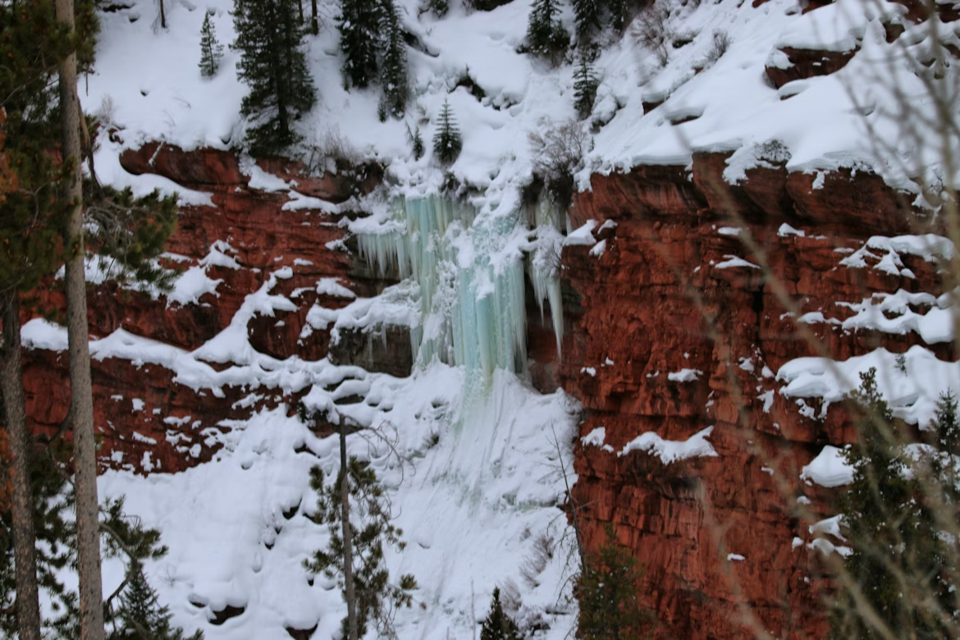
Photo by Laura Seaman on Unsplash
Getting the timing right makes a significant difference in the experience.
Peak flow: Late May through early July. This is when snowmelt from the high peaks drives maximum volume through Colorado’s river systems. Cascades that trickle in August roar in June. If dramatic whitewater is the priority, plan accordingly.
Spring (May–June): Best overall for most falls. High volume, wildflowers beginning, cool temperatures.
Summer (July–August): Still beautiful but lower flow. Great for family hikes and accessible trails. Afternoon thunderstorms are common above treeline — start early.
Fall (September–October): Lower water volume is offset by aspen color. The contrast of gold foliage against white cascades makes for some of the best photography of the year.
Winter (November–April): Many high-altitude falls freeze into dramatic ice pillars suitable for technical ice climbing. Most remain frozen until late May due to elevations above 7,000 feet.
Best in Winter: Horsethief Falls (near Woodland Park) is snowshoeing-accessible and transforms beautifully in cold weather, offering a quieter, more meditative experience than the summer crowds allow.
RMNP Timed-Entry Permits
Rocky Mountain National Park requires timed-entry reservations from May 23 through mid-October. This applies to all vehicle entries.
- Bear Lake Road (Alberta Falls, Fern Falls): Reservations required 5 a.m.–6 p.m.
- Rest of the park (including Longs Peak, Lumpy Ridge): Reservations required 9 a.m.–2 p.m.
Book reservations at recreation.gov. Day-before reservations open at 7 p.m. A shuttle also departs from the Estes Park Visitor Center, though it still requires a reservation and entry fee.
What to Bring: Hiking Prep
A good day at a Colorado waterfall starts with the right gear. Here is a quick checklist:
- Water — at least 2 liters per person, more for longer hikes
- Layers — mountain weather changes fast; a wind layer and light insulation are worth the extra weight even in summer
- Trekking poles — helpful on steeper descent trails like Ouzel Falls
- Sun protection — Colorado’s elevation means stronger UV exposure year-round
- Trail-ready footwear — waterproof boots are a good call near splash zones
- Permit confirmation — download or screenshot RMNP timed-entry reservations before heading into areas with spotty cell coverage
Leave No Trace
Colorado’s waterfall areas are fragile environments. Travertine formations (like those at Hanging Lake), mossy cliff vegetation, and streamside habitat all take decades to recover from human impact. Stay on designated trails, pack out all waste, and keep noise to a minimum near wildlife corridors.
Speaking of wildlife: RMNP is active elk, moose, and black bear country. Keep distance, store food properly, and never feed wildlife. Families planning a trip will also find a solid starting point in this roundup of hiking trails in Colorado for families, which covers accessible options across the state.
Special Permits and Entry Fees
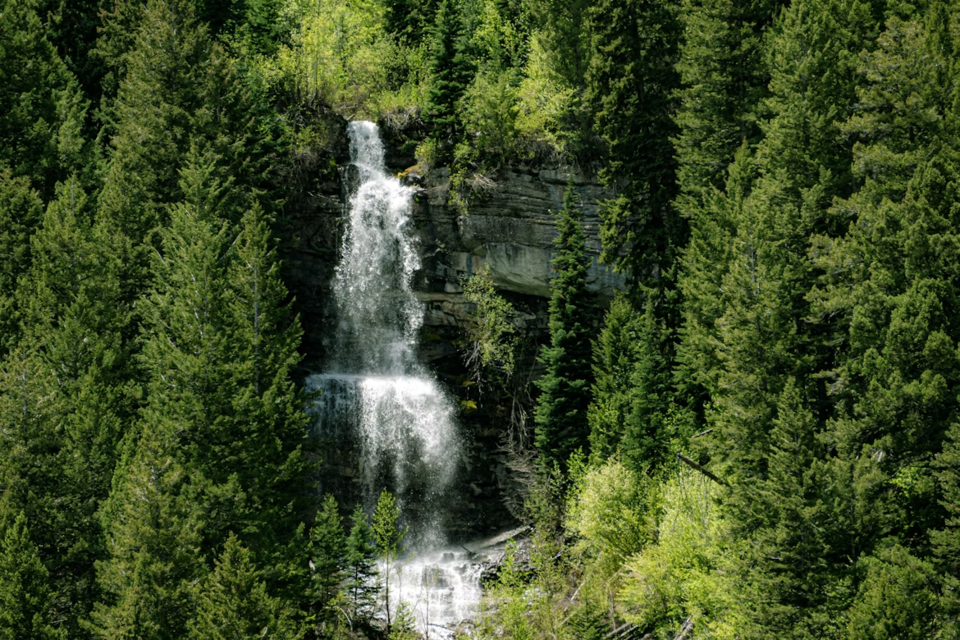
Photo by Oliver Fetter on Unsplash
A few sites require advance planning:
- Hanging Lake (Glenwood Canyon): Pre-purchased permit required for all hikers. Swimming and dogs are strictly prohibited to protect the travertine ecosystem. This is one of the most fragile sites in the state — the rules exist for good reason.
- Rocky Mountain National Park: Entry fee plus timed-entry reservation (May–October, see above)
- Box Canyon Falls: Entry fee; funds for trail infrastructure maintenance
- The Broadmoor Seven Falls (Colorado Springs): Ticket purchase and shuttle ride required. The only Colorado waterfall on the National Geographic list of International Waterfalls, with seven distinct drops totaling 181 vertical feet.
Colorado’s waterfall trails are often the gateway to deeper backcountry exploration. For those interested in extending a trip beyond a day hike, this guide to backpacking in Colorado covers the essentials for venturing further into the wilderness.