If you have ever found yourself driving along Peña Boulevard toward Denver International Airport, you have most probably encountered an unforgettable sight.
If you have ever found yourself driving along Peña Boulevard toward Denver International Airport, you have most probably encountered an unforgettable sight. A striking blue horse rears up against the sky, its muscular form catching the light while glowing red eyes seem to follow every passing car. Locals have given this sculpture an affectionate nickname: "Blucifer," a playful blend of "Blue" and "Lucifer" that speaks to its fierce reputation. Yet behind this imposing 32-foot figure lies a story of artistic vision, personal tragedy, and Colorado pride that few visitors fully understand. The tale of how this controversial masterpiece came to guard Denver's airport is as compelling as the sculpture itself.
Origins of the Blue Mustang Commission
The story begins long before most travelers ever laid eyes on the sculpture. Denver commissioned the piece in 1992, even before the airport opened its doors. Artist Luis Jiménez received a $300,000 commission through Denver's "one-percent-for-art" policy, which dedicates a portion of construction budgets to public art funding. At the time, city officials envisioned a bold statement piece that would greet visitors to the new airport.
Luis Jiménez and the Sculpture's Creation
Luis Jiménez was already a famous sculptor when he took on the project. His vision proved truly massive. The statue stands a towering 32 feet tall and weighs 9,000 pounds. Built from cast fiberglass rather than stone, the sculpture consists of three main parts: the head, torso, and hindquarter. The scale alone required years of painstaking work in his New Mexico studio.
The Accident That Claimed the Artist's Life
The story takes a somber turn in 2006. Luis Jiménez, then 65 years old, suffered a tragic accident when a section of his own sculpture fell on him. The falling piece severed an artery in his leg, and the injury claimed his life. The statue was completed posthumously by his family and friends. Professional painters Richard LaVato and Camillo Nuñez stepped in to help, while his widow, Susan Jiménez, oversaw the work using his specific paint formulas. Together, they honored his vision.
Why the Statue Looks the Way It Does
This powerful horse has deep roots in Jiménez's personal history. He partly modeled it after his own Appaloosa horse named Blackjack, while also drawing inspiration from the wild mustangs that roamed the Southwest. The work reflects the Lowbrow and Urban Art movements, giving it an intentionally edgy appearance. Interestingly, early sketches showed the horse in yellow or pink before blue was eventually chosen. The tail serves a structural purpose as well, acting as a fiberglass tripod that supports the heavy sculpture.
The Red Eyes and Their Local Lore
Those iconic glowing red eyes certainly catch attention. Illuminated by bright LED floodlights, many people find them unsettling. The truth behind them, however, is quite personal. The eyes serve as a heartfelt tribute to the artist's father, who owned a neon sign shop in El Paso. Jiménez learned welding and spray painting from his father in that shop, and the glowing eyes honor that connection.
The sculpture's dramatic appearance has fueled countless theories about its meaning. Visitors curious about the airport's other mysteries can explore the various Denver airport conspiracy theories that have circulated for decades.
How "Blucifer" Got Its Name
The airport officially calls the sculpture "Mustang," though locals have given it a more memorable nickname. The piece had a long journey from commission to completion. Originally commissioned in 1992, it was not installed for 15 years. Its public debut came on February 11, 2008, as part of the airport's 30th-anniversary celebrations. The final cost grew significantly during that time, more than doubling from the original $300,000 to $650,000.
Public Reaction and Early Controversy
Not everyone loved the horse at first. In 2011, Travel + Leisure named it one of the "World's Ugliest Public Art" pieces. One reviewer called it a "darker-than-a-Smurf hell beast." Some suggested painting it orange to match the Denver Broncos. The city had sued the artist before his death over missed completion deadlines, adding to the controversy. Westword even polled readers about whether the "Mustang" should be retired.
The horse fits right in with DIA's reputation for provocative public art. The airport houses several other notable works, including the 9 stunning Denver airport murals you should see that line its walls.
Photo by Cameron Cox on Unsplash
Blucifer's Place in Denver's Art Scene Today
Despite the early controversy, the horse remains in place. Airport CEO Phil Washington has stated the statue will stay, joking that he wants to avoid being "cursed." The sculpture has no connection to the Denver Broncos, despite what some visitors assume. An airport official once called the horse a "fierce protector of travelers." It endures tough conditions year after year. Conservators note that rain, hail, and intense wind constantly affect the art, yet the horse remains resilient.
Where to See the Statue at DIA
Travelers heading to DIA will find the Denver Airport horse on Peña Boulevard. The airport's public art policy required it to remain in public view for at least five years, a threshold long since passed. The Blue Mustang Denver has earned its permanent place in the landscape.
Next time the road leads to Denver International, give the sculpture a respectful nod. Better yet, arrive early and explore the airport's full collection of public art before catching a flight. Blucifer will be waiting on the way out.
If you have ever found yourself driving along Peña Boulevard toward Denver International Airport, you have most probably encountered an unforgettable sight. A striking blue horse rears up against the sky, its muscular form catching the light while glowing red eyes seem to follow every passing car. Locals have given this sculpture an affectionate nickname: “Blucifer,” a playful blend of “Blue” and “Lucifer” that speaks to its fierce reputation. Yet behind this imposing 32-foot figure lies a story of artistic vision, personal tragedy, and Colorado pride that few visitors fully understand. The tale of how this controversial masterpiece came to guard Denver’s airport is as compelling as the sculpture itself.
Origins of the Blue Mustang Commission
The story begins long before most travelers ever laid eyes on the sculpture. Denver commissioned the piece in 1992, even before the airport opened its doors. Artist Luis Jiménez received a $300,000 commission through Denver’s “one-percent-for-art” policy, which dedicates a portion of construction budgets to public art funding. At the time, city officials envisioned a bold statement piece that would greet visitors to the new airport.
Luis Jiménez and the Sculpture’s Creation
Luis Jiménez was already a famous sculptor when he took on the project. His vision proved truly massive. The statue stands a towering 32 feet tall and weighs 9,000 pounds. Built from cast fiberglass rather than stone, the sculpture consists of three main parts: the head, torso, and hindquarter. The scale alone required years of painstaking work in his New Mexico studio.
The Accident That Claimed the Artist’s Life
The story takes a somber turn in 2006. Luis Jiménez, then 65 years old, suffered a tragic accident when a section of his own sculpture fell on him. The falling piece severed an artery in his leg, and the injury claimed his life. The statue was completed posthumously by his family and friends. Professional painters Richard LaVato and Camillo Nuñez stepped in to help, while his widow, Susan Jiménez, oversaw the work using his specific paint formulas. Together, they honored his vision.
Why the Statue Looks the Way It Does
This powerful horse has deep roots in Jiménez’s personal history. He partly modeled it after his own Appaloosa horse named Blackjack, while also drawing inspiration from the wild mustangs that roamed the Southwest. The work reflects the Lowbrow and Urban Art movements, giving it an intentionally edgy appearance. Interestingly, early sketches showed the horse in yellow or pink before blue was eventually chosen. The tail serves a structural purpose as well, acting as a fiberglass tripod that supports the heavy sculpture.
The Red Eyes and Their Local Lore
Those iconic glowing red eyes certainly catch attention. Illuminated by bright LED floodlights, many people find them unsettling. The truth behind them, however, is quite personal. The eyes serve as a heartfelt tribute to the artist’s father, who owned a neon sign shop in El Paso. Jiménez learned welding and spray painting from his father in that shop, and the glowing eyes honor that connection.
The sculpture’s dramatic appearance has fueled countless theories about its meaning. Visitors curious about the airport’s other mysteries can explore the various Denver airport conspiracy theories that have circulated for decades.
How “Blucifer” Got Its Name
The airport officially calls the sculpture “Mustang,” though locals have given it a more memorable nickname. The piece had a long journey from commission to completion. Originally commissioned in 1992, it was not installed for 15 years. Its public debut came on February 11, 2008, as part of the airport’s 30th-anniversary celebrations. The final cost grew significantly during that time, more than doubling from the original $300,000 to $650,000.
Public Reaction and Early Controversy
Not everyone loved the horse at first. In 2011, Travel + Leisure named it one of the “World’s Ugliest Public Art” pieces. One reviewer called it a “darker-than-a-Smurf hell beast.” Some suggested painting it orange to match the Denver Broncos. The city had sued the artist before his death over missed completion deadlines, adding to the controversy. Westword even polled readers about whether the “Mustang” should be retired.
The horse fits right in with DIA’s reputation for provocative public art. The airport houses several other notable works, including the 9 stunning Denver airport murals you should see that line its walls.
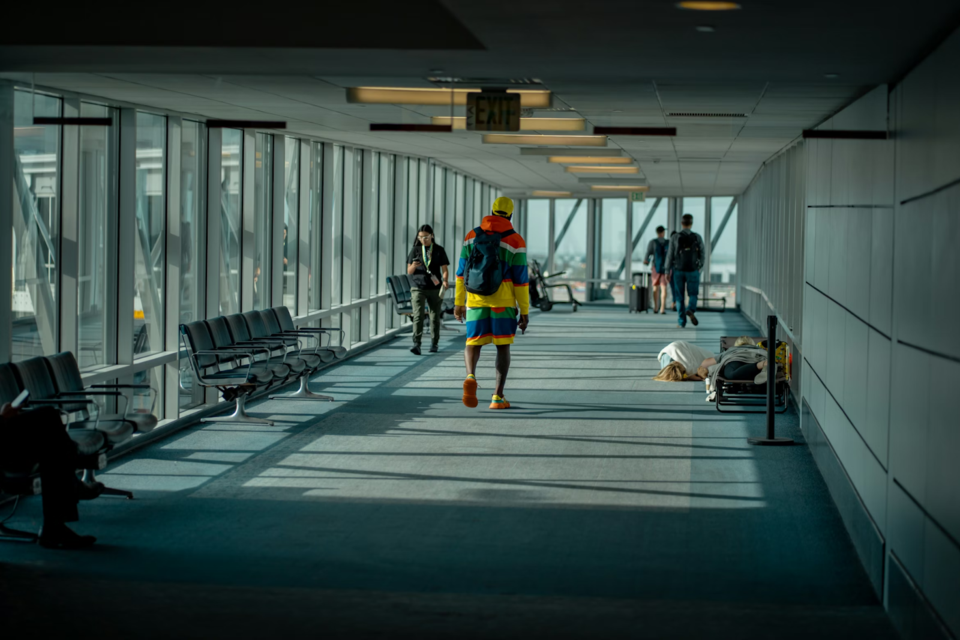
Photo by Cameron Cox on Unsplash
Blucifer’s Place in Denver’s Art Scene Today
Despite the early controversy, the horse remains in place. Airport CEO Phil Washington has stated the statue will stay, joking that he wants to avoid being “cursed.” The sculpture has no connection to the Denver Broncos, despite what some visitors assume. An airport official once called the horse a “fierce protector of travelers.” It endures tough conditions year after year. Conservators note that rain, hail, and intense wind constantly affect the art, yet the horse remains resilient.
Where to See the Statue at DIA
Travelers heading to DIA will find the Denver Airport horse on Peña Boulevard. The airport’s public art policy required it to remain in public view for at least five years, a threshold long since passed. The Blue Mustang Denver has earned its permanent place in the landscape.
Next time the road leads to Denver International, give the sculpture a respectful nod. Better yet, arrive early and explore the airport’s full collection of public art before catching a flight. Blucifer will be waiting on the way out.