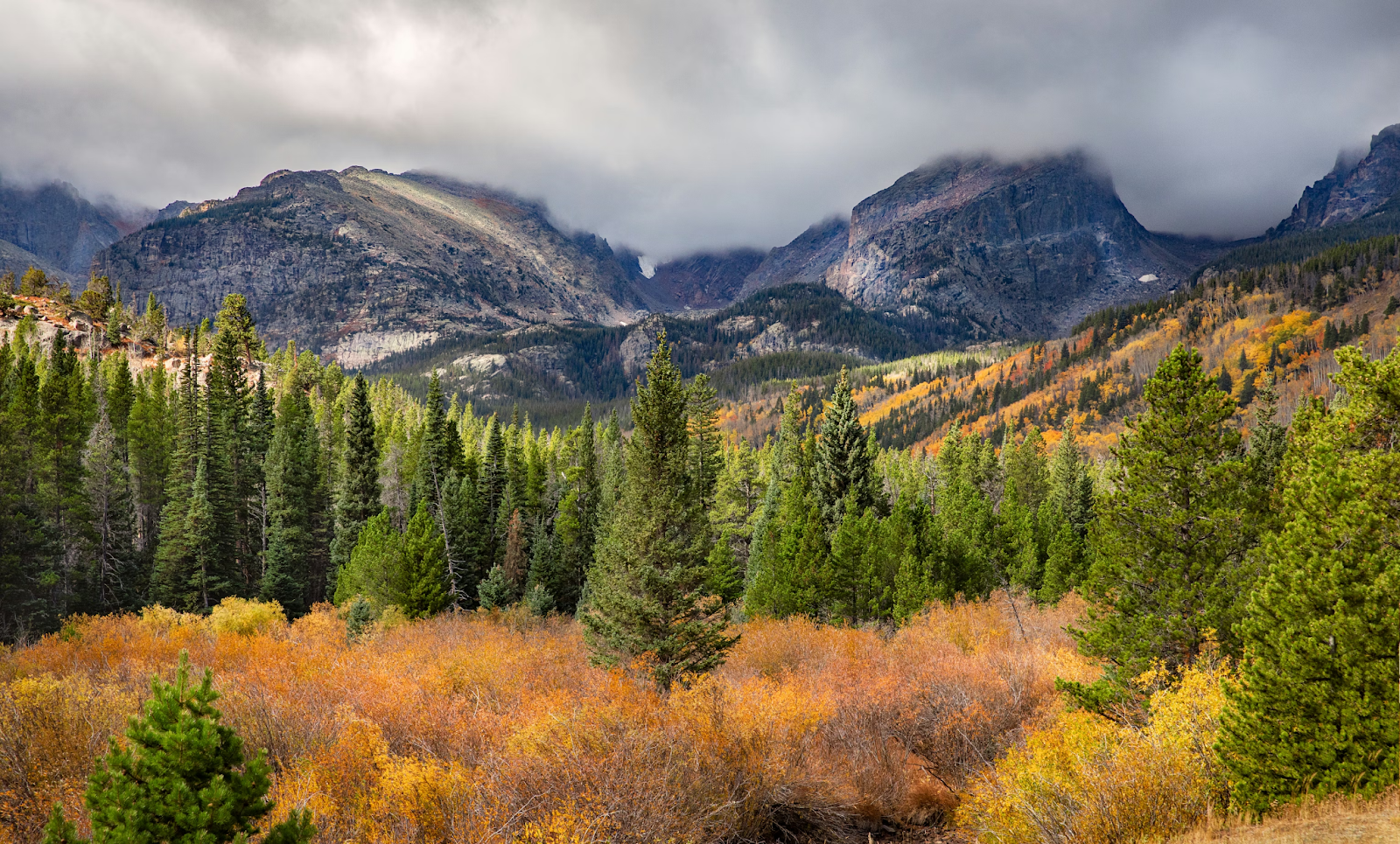
More than four million visitors make the journey each year. They come for the peaks. The wildlife. The thin mountain air that makes every breath feel earned.
More than four million visitors make the journey each year. They come for the peaks. The wildlife. The thin mountain air that makes every breath feel earned.
Rocky Mountain National Park spans 415 square miles of rugged Colorado wilderness, offering everything from deep evergreen forests to windswept alpine tundra where only the hardiest plants survive. Planning a visit requires understanding the park's unique character, its seasonal rhythms, and a few key regulations. Get those details right, and the mountains deliver an experience worth every mile of the drive.
The terrain shifts dramatically with elevation. Meadows carpeted in wildflowers give way to glistening alpine lakes. Towering peaks scrape the sky. More than 300 miles of hiking trails weave through it all, connecting visitors with landscapes that feel almost impossibly grand.
Where the Park Is Located and Why It Matters
The Continental Divide runs north-south through the park's center like a spine, and this geological feature shapes everything. Snowmelt on one side eventually reaches the Pacific Ocean. Water on the other flows toward the Atlantic. Cross this boundary, and the landscape transforms: different plants, different weather, different wildlife.
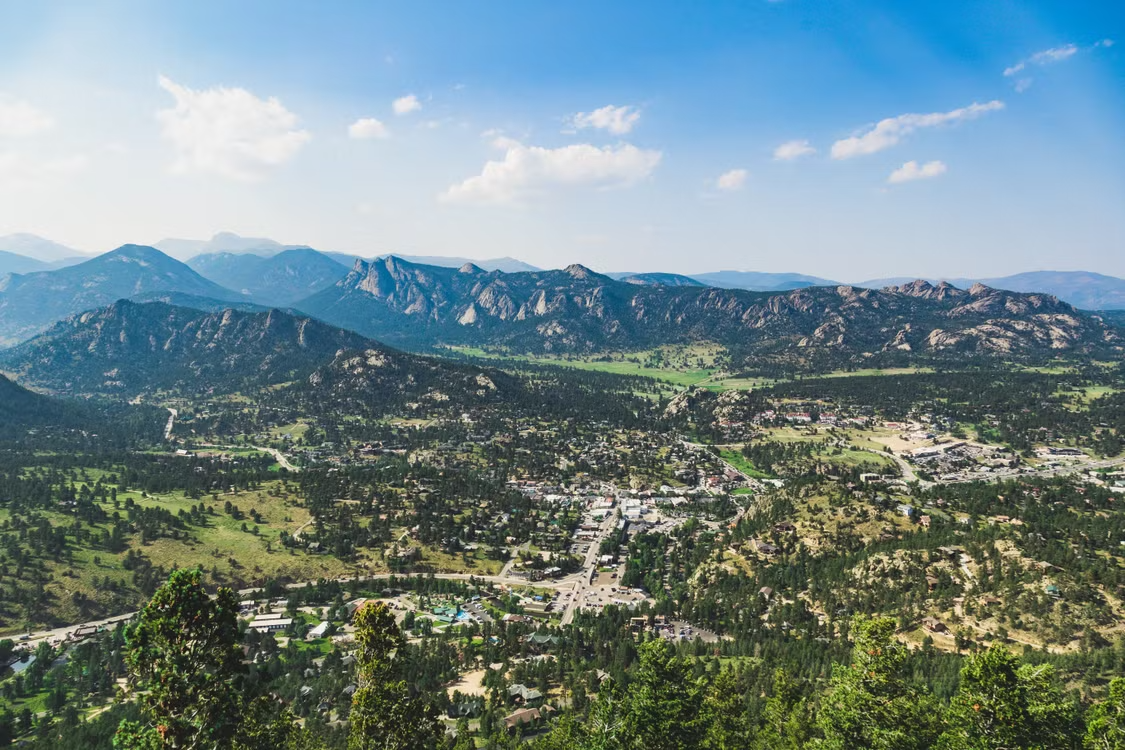
Northern Colorado puts this treasure within easy reach of major urban centers. Many travelers combine a park visit with a Denver Broncos game at Empower Field at Mile High or cheer for the Colorado Rockies at Coors Field. The proximity to Estes Park has made Rocky Mountain National Park the beating heart of the region's outdoor recreation economy.
Two distinct halves await exploration. The eastern slope draws the heaviest traffic, with Longs Peak, Moraine Park, Bear Lake, Wild Basin, and Sprague Lake clustered along popular trailheads and accessible scenic overlooks. The western slope offers something different: Colorado's largest natural lake at Grand Lake, the expansive Kawuneeche Valley where moose and elk roam freely, the headwaters of the Colorado River, and more than a dozen backcountry valleys perfect for horseback riding and solitary hikes.
How Far Is Rocky Mountain National Park from Longmont, Denver, Boulder, and Fort Collins
Front Range drivers have a real advantage here: no mountain passes stand between any of these cities and the park's east side, and the roads stay well maintained year-round. Below is what to expect from each starting point.
From Longmont, the Beaver Meadows entrance sits roughly 35 to 38 miles away, and the drive takes about 50 to 60 minutes. US-36 west runs directly through the small town of Lyons before climbing into Estes Park, making it the shortest and most direct route of the four.
From Denver, the fastest option follows I-25 north to US-36 through Boulder, covering about 65 to 70 miles in 1.5 to 2 hours depending on traffic through Boulder and Lyons. Travelers with extra time can instead take the Peak to Peak Scenic Byway (Highways 119, 72, and 7) through Nederland and Allenspark, a longer but far more scenic route that runs closer to 2 to 2.5 hours, and one of the best fall foliage drives in the region.
From Boulder, the east entrance is about 40 miles up US-36, typically a 60- to 90-minute drive depending on the route through Lyons. The Peak to Peak Scenic Byway is also accessible directly from Boulder Canyon for those who prefer the slower, more scenic option.
From Fort Collins, US-34 through the Big Thompson Canyon covers roughly 45 to 50 miles and takes about 70 to 90 minutes, passing through Loveland on the way into Estes Park.
Regardless of starting point, arriving early matters more than the route chosen. Parking at the busiest trailheads, including Bear Lake and Glacier Gorge, routinely fills by 6 to 7 AM in summer, and a valid timed entry reservation is required from late May through mid-October.
Quick reference:
Longmont: 35-38 miles, 50-60 minutes via US-36 through Lyons
Denver: 65-70 miles, 1.5-2 hours via I-25 and US-36 (or 2-2.5 hours via the Peak to Peak Scenic Byway)
Boulder: about 40 miles, 60-90 minutes via US-36
Fort Collins: 45-50 miles, 70-90 minutes via US-34 through Big Thompson Canyon
A Brief History of Rocky Mountain National Park
January 26, 1915. That's when Congress formally established Rocky Mountain National Park, recognizing the area's extraordinary ecological value and preserving it for generations to come. The legacy grew in 1976 when the park received designation as a UNESCO World Biosphere Reserve, cementing its global ecological importance.
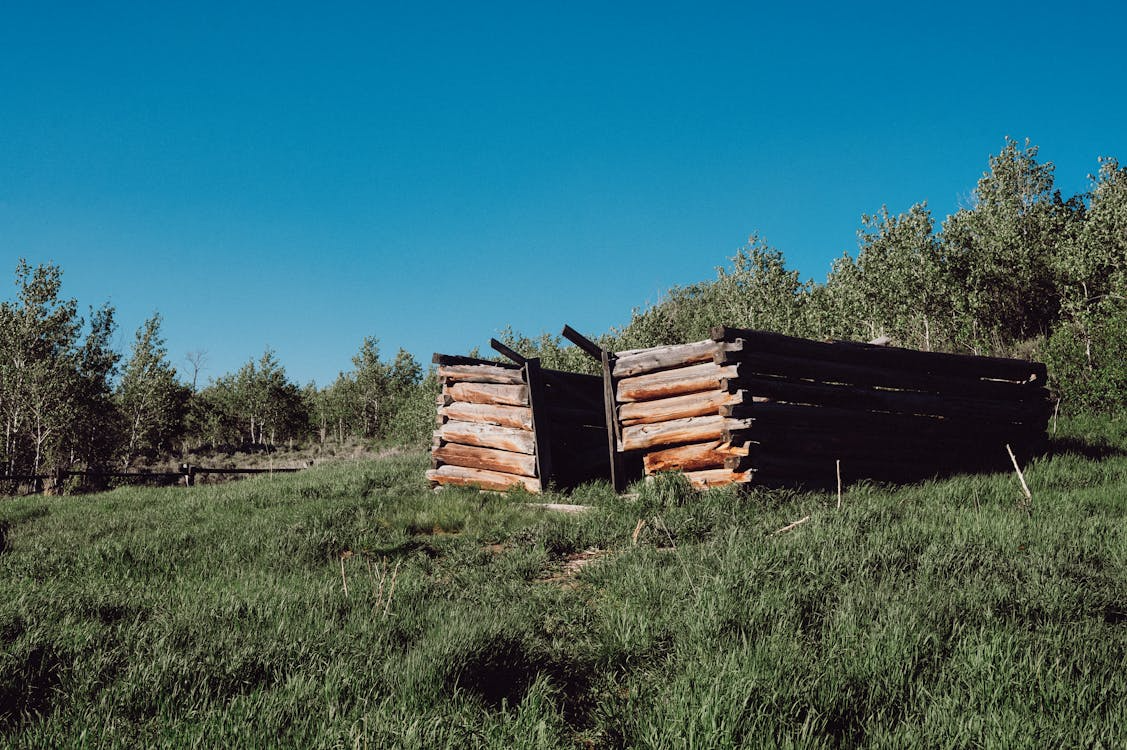
Visitors looking to connect with the park's human history can explore the Holzwarth Historic Site. This preserved 1920s-era guest ranch shows how travelers experienced these mountains a century ago, back when the journey here required considerably more effort than hopping on I-70. The homestead offers tangible links to early tourism and a slower way of life.
The remarkable thing? The same elements that made this place special in 1915 continue to make it special today. Rolling tundra. Stoic mountain peaks. Glacier-carved valleys. Abundant wildlife. Some things, thankfully, remain unchanged.
Photo by Michael Kirsh on Unsplash
Landscapes, Wildlife, and Ecosystems
Elevation determines everything here. The park's remarkable verticality creates distinct ecological zones, each with its own character and inhabitants.
The Montane zone stretches from 5,600 to 9,500 feet, where ponderosa pines shade open meadows and mule deer graze in early morning light. The air still feels familiar at these elevations. Climb higher into the Subalpine zone between 9,000 and 11,000 feet, and dense subalpine fir and Engelmann spruce forests create cathedral-like canopies. The temperature drops. The trails steepen. Above 11,000 feet, the Alpine Tundra takes over with its stark, windswept landscape where only the hardiest plants survive. Tiny wildflowers bloom in brilliant colors during the brief summer season. Krummholz trees twist and bend under relentless winds. Cushion plants hug the ground for warmth.
Wildlife thrives across all these zones. The park protects more than 60 species of mammals, from elk, bighorn sheep, moose, and mule deer to the smaller marmots and pikas that scurry across rocky slopes. Everyday sightings of chipmunks become routine. But watching elk in rut during autumn? That's something else entirely.
Bird watchers find paradise here with more than 280 recorded species. Soaring raptors circle overhead while tiny rosy-finches somehow inhabit the alpine zone year-round. Bring binoculars.
Trail Ridge Road and Scenic Drives
Trail Ridge Road holds the distinction of being the highest continuously paved road in North America. This 48-mile engineering marvel climbs above tree line, crosses the tundra at elevations exceeding 12,000 feet, and delivers views that justify every hairpin turn.
Along this route sits the Alpine Visitor Center at 11,796 feet, the highest elevation visitor center in the entire National Park System. Stop here to catch your breath in the thin mountain air, absorb the panoramic vistas, and learn about the unique high-altitude environment that surrounds the parking lot.
The drive takes two to three hours without stops. Nobody finishes in two to three hours. The overlooks demand attention. The short trail access points beckon. Plan for a full day.
Winter visitors should note that Trail Ridge Road typically opens by late May (weather permitting) and closes in mid-October when snow accumulates, so planning around this seasonal access is essential for those hoping to drive the entire route.
Best Hiking Trails for Different Skill Levels
More than 300 miles of trails wind through every ecosystem the park contains. Something exists for everyone, from families with small children to experienced mountaineers chasing summits.
Beginners will find plenty of manageable options. Sprague Lake offers an easy, wheelchair-accessible loop with views of Flattop Mountain and Hallett Peak, while the Coyote Valley Trail on the western side provides level terrain through meadows where moose frequently graze. The Bear Lake corridor holds several of the park's most popular beginner and intermediate trails, covered in detail below.
Intermediate hikers can tackle routes that demand moderate effort but reward every step with spectacular alpine scenery: Loch Lake Trail, Chasm Lake, Sky Pond, Odessa and Fern Lakes, and Lake Haiyaha all fit this category.
For the ambitious, Longs Peak stands at 14,259 feet as the park's highest summit. This iconic "fourteener" requires advanced preparation, an early start (successful summits typically begin before 3 AM), and experience with high-altitude conditions. Those seeking alternatives will find 72 peaks rising above 12,000 feet throughout the park.
Detailed trail information and recommendations are available for those looking to explore the best hiking trails in Rocky Mountain National Park and plan their perfect adventure.
Bear Lake: The Park's Most Visited Destination
Photo by kla4067 on Wikimedia
Bear Lake draws more visitors than any other single spot in the park, and for good reason. The lake itself sits at 9,475 feet, ringed by subalpine fir and framed by Hallett Peak and Flattop Mountain, with a flat, half-mile loop trail that suits nearly every fitness level and doubles as the launch point for some of the park's best-loved hikes.
From the Bear Lake trailhead, the walk to Nymph, Dream, and Emerald Lakes covers 3.6 miles round trip with manageable elevation gain, making it a favorite for visitors acclimating to the altitude. Dream Lake alone is reachable in about a mile, roughly 30 minutes each way, and consistently ranks among the shortest routes to a genuine alpine payoff. More ambitious hikers continue on to Lake Haiyaha or push toward Flattop Mountain, while Glacier Gorge, just down the road, connects to Alberta Falls, The Loch, and Sky Pond.
Because of its popularity, the Bear Lake corridor operates under its own access rules. The parking lots at Bear Lake and Glacier Gorge routinely fill by 6 to 7 AM during summer, and a Timed Entry + Bear Lake Road permit, separate from the park's general timed entry permit, is required for vehicles entering the corridor between 5 AM and 6 PM from late May through mid-October. Swimming and boating are not allowed at Bear Lake itself, which helps protect the shoreline and the wildlife that depends on it.
Visitors who arrive without a permit, or who simply prefer not to chase parking, can use the free hiker shuttle. The Bear Lake Route and Moraine Park Route shuttles run from the Estes Park Visitor Center and the park's own Park & Ride facility, dropping riders directly at the Bear Lake, Glacier Gorge, and Moraine Park trailheads throughout the day. Riding the shuttle sidesteps the parking search entirely and remains one of the most reliable ways to reach the corridor during peak season.
Bear Lake at a glance:
Trail: half-mile, flat, wheelchair-accessible loop around the lake itself
Nearby hikes: Nymph, Dream, and Emerald Lakes (3.6 miles round trip); Lake Haiyaha; Flattop Mountain; Glacier Gorge access to Alberta Falls, The Loch, and Sky Pond
Permit: Timed Entry + Bear Lake Road permit required 5 AM-6 PM, late May through mid-October
Parking: Bear Lake and Glacier Gorge lots typically fill by 6-7 AM in summer
Shuttle: free Bear Lake Route and Moraine Park Route shuttles from the Estes Park Visitor Center and Park & Ride
Rules: no swimming or boating at Bear Lake
Photo by Lauren Lopes on Unsplash
Things to Do in Rocky Mountain National Park
Hiking dominates visitor activity, but the park offers much more for those willing to explore.
Wildlife viewing attracts photographers and nature lovers throughout the year, with elk, moose, bighorn sheep, and numerous bird species appearing regularly along roadways and trails. The Kawuneeche Valley on the west side and Moraine Park on the east side produce the most consistent sightings for those willing to bring patience and a camera with a good zoom lens.
Fishing draws anglers to trout-filled streams and lakes throughout the front country and backcountry, and many visitors hire guides who know the best spots and understand the regulations. Horseback riding provides another way to experience the trails, with several outfitters offering guided rides through quiet backcountry routes that let travelers see the park the way early visitors did. Rock climbing attracts both beginners and experienced climbers to the park's granite faces, while winter opens up snowshoeing, cross-country skiing, and even ice climbing on frozen waterfalls.
Cyclists can access the park with specific entry fees of $15 for one day or $20 for seven days.
Pet owners should note that their companions are strictly prohibited on all hiking trails and in the backcountry. Pets are permitted only in vehicle-accessible areas including roadsides, parking lots, picnic areas, and campgrounds. This policy protects wildlife and ensures visitor safety.
For those who enjoy exploring the best national parks in Colorado, Rocky Mountain consistently ranks among the top destinations. Visitors seeking other dramatic Colorado landscapes might also consider the Royal Gorge Bridge & Park for a different perspective on the state's geological wonders.
When to Visit and What Each Season Offers
The park never closes. Twenty-four hours a day, 365 days a year, these mountains remain accessible. But each season offers a fundamentally different experience.
Summer runs from Memorial Day through Labor Day and represents peak season for good reason. Trails are snow-free, wildlife is active, and wildflowers bloom across alpine meadows. The tradeoff comes in the form of crowds, with parking lots at Bear Lake filling before breakfast and timed entry permits required for all visitors.
Ask locals their favorite time to visit and most will say autumn, which stretches from Labor Day through mid-October. Crowds thin out while gold and orange paint the mountainsides. Elk rut creates dramatic wildlife viewing opportunities. The weather remains pleasant for hiking, though visitors should prepare for the possibility of early snow at higher elevations.
Winter transforms the park into a snow-covered wonderland after Trail Ridge Road closes. Snowshoeing, cross-country skiing, and wildlife viewing continue for those willing to brave the cold, with Moraine Park Campground remaining open as the only option for adventurous campers.
Spring brings melting snow, rushing waterfalls, and fewer visitors. Many trails remain impassable until late May or June, but wildflowers begin appearing at lower elevations as wildlife becomes active again after the quiet winter months.
The park offers fee-free days throughout the year, providing budget-conscious visitors with opportunities to experience this natural treasure without an entrance fee.
Planning a Day Trip vs. a Multi-Day Visit
Both approaches work well here, and the right choice usually comes down to how many trails a visitor wants to cover and how much driving they're willing to do in a single day.
A day trip suits Front Range residents well, given how close Longmont, Boulder, Denver, and Fort Collins all sit to the park's east side. A well-planned day typically covers one major trail area, such as the Bear Lake corridor or Moraine Park, along with a stretch of Trail Ridge Road if time allows. Leaving before sunrise makes the difference between finding parking and circling a full lot, especially at Bear Lake and Glacier Gorge. Visitors pairing a Rocky Mountain day with a broader Colorado itinerary often build it around a stop in one of the state's mountain towns on the way home.
A multi-day visit opens up the park considerably. Two or three nights allow time to explore both the eastern and western slopes, tackle a longer hike like Sky Pond or Chasm Lake without rushing, and catch sunrise or sunset light on the peaks, which the midday day-trip crowd typically misses. Staying in Estes Park keeps the east side trails and Trail Ridge Road within easy reach, while a night in Grand Lake opens up the quieter Kawuneeche Valley and the park's western trailheads. Multi-day visitors also have more flexibility to shift plans around weather, since afternoon thunderstorms are common enough in summer to derail a single tightly scheduled day.
For those building a longer Colorado itinerary, the park also pairs naturally with a broader loop through the state's mountain towns, and travelers heading south afterward often extend the trip toward Colorado Springs for a second dose of alpine scenery.
Day trip works well if:
You're coming from Longmont, Boulder, Denver, or Fort Collins
You want to focus on one trail area, such as Bear Lake or Moraine Park
You can leave before sunrise to beat trailhead parking
Multi-day works well if:
You want to cover both the eastern and western slopes
You want time for longer hikes like Sky Pond or Chasm Lake
You want flexibility around afternoon thunderstorms and shifting weather
Entrance Fees, Timed Entry, and Visitor Tips
A few essentials to know before arrival will make the visit considerably smoother. All payments are cashless, requiring credit or debit cards at fee stations. Those who prefer cash can purchase passes at the Rocky Mountain Conservancy Nature Store.
Entrance fees at a glance:
Vehicle: $30/day or $35/week
Rocky Mountain National Park Annual Pass: $70
Pedestrians/cyclists: $15/day or $20/week
Motorcycle: $25/day or $30/week
America the Beautiful Annual Pass (all national parks): $80
Senior Pass (62+): $80 lifetime or $20 annually
Timed entry permits are mandatory from May 22 through mid-October 2026, with no exceptions. A $2 reservation processing fee applies. Two permit types exist: the Timed Entry + Bear Lake Road permit, required for Bear Lake corridor access between 5 AM and 6 PM and running May 22 through October 18, 2026, detailed further in the Bear Lake section above, and the General Timed Entry permit, covering the rest of the park from 9 AM to 2 PM and running May 22 through October 12, 2026.
Reservations can be made at Recreation.gov, and securing permits early during peak season is essential since entrance stations will turn away visitors without valid permits. Mountain weather changes fast, with temperatures swinging 20 to 30 degrees between high elevations and lower valleys. Summer thunderstorms develop quickly in the afternoons.
Pack layers, bring rain gear, and carry extra water. When hiking above tree line, watch the horizon for developing storms and always know your escape route.
Where to Stay Near the Park
Options exist both within park boundaries and in surrounding communities, with something available for every budget and comfort level.
The park operates five frontcountry campgrounds at $30 per night during summer: Aspenglen, Glacier Basin, Moraine Park, Timber Creek, and Longs Peak. Aspenglen, Glacier Basin, and Moraine Park accept reservations up to six months in advance and fill quickly, while Longs Peak and Timber Creek operate on a first-come, first-served basis. Timber Creek on the western side lies in the heart of the Kawuneeche Valley with 98 spacious, scenic campsites that make the drive worthwhile.
Winter camping drops to $18 per night when water services are off, with Moraine Park serving as the only campground open during the colder months on a first-come, first-served basis.
Backcountry camping requires a $36 permit processing fee for overnight wilderness stays. Permits must be obtained in advance since high demand during peak seasons makes last-minute availability rare.
Gateway communities provide additional options for those preferring more amenities. Estes Park on the east side offers abundant lodging ranging from hotels and cabins to bed-and-breakfasts. Grand Lake on the west side provides a quieter alternative with its own selection of accommodations. Booking well in advance is essential for summer visits.
For comprehensive planning resources and current conditions, the Rocky Mountain National Park website offers detailed guidance on everything from trail status to recent wildlife sightings.
Start Planning Your Rocky Mountain Adventure
These mountains have something for everyone. Solitude on remote backcountry trails. Elk grazing in mountain meadows. Sunrise from a 14,000-foot summit. A leisurely drive through alpine tundra. The experience stays with visitors long after they leave.
The best way to appreciate Rocky Mountain National Park is simple: get out into it.
Reserve timed entry permits. Pack layers for unpredictable weather. Arrive early to beat the crowds. Stay late to watch the alpenglow on the peaks.
Whether spending a single afternoon on Trail Ridge Road or dedicating a full week to exploring every corner, these mountains await with open trails, stunning vistas, and wildlife around every bend.
Start planning today. Discover why millions of visitors return to these peaks year after year.
More than four million visitors make the journey each year. They come for the peaks. The wildlife. The thin mountain air that makes every breath feel earned.
Rocky Mountain National Park spans 415 square miles of rugged Colorado wilderness, offering everything from deep evergreen forests to windswept alpine tundra where only the hardiest plants survive. Planning a visit requires understanding the park’s unique character, its seasonal rhythms, and a few key regulations. Get those details right, and the mountains deliver an experience worth every mile of the drive.
The terrain shifts dramatically with elevation. Meadows carpeted in wildflowers give way to glistening alpine lakes. Towering peaks scrape the sky. More than 300 miles of hiking trails weave through it all, connecting visitors with landscapes that feel almost impossibly grand.
Where the Park Is Located and Why It Matters
The Continental Divide runs north-south through the park’s center like a spine, and this geological feature shapes everything. Snowmelt on one side eventually reaches the Pacific Ocean. Water on the other flows toward the Atlantic. Cross this boundary, and the landscape transforms: different plants, different weather, different wildlife.
Northern Colorado puts this treasure within easy reach of major urban centers. Many travelers combine a park visit with a Denver Broncos game at Empower Field at Mile High or cheer for the Colorado Rockies at Coors Field. The proximity to Estes Park has made Rocky Mountain National Park the beating heart of the region’s outdoor recreation economy.
Two distinct halves await exploration. The eastern slope draws the heaviest traffic, with Longs Peak, Moraine Park, Bear Lake, Wild Basin, and Sprague Lake clustered along popular trailheads and accessible scenic overlooks. The western slope offers something different: Colorado’s largest natural lake at Grand Lake, the expansive Kawuneeche Valley where moose and elk roam freely, the headwaters of the Colorado River, and more than a dozen backcountry valleys perfect for horseback riding and solitary hikes.
How Far Is Rocky Mountain National Park from Longmont, Denver, Boulder, and Fort Collins
Front Range drivers have a real advantage here: no mountain passes stand between any of these cities and the park’s east side, and the roads stay well maintained year-round. Below is what to expect from each starting point.
From Longmont, the Beaver Meadows entrance sits roughly 35 to 38 miles away, and the drive takes about 50 to 60 minutes. US-36 west runs directly through the small town of Lyons before climbing into Estes Park, making it the shortest and most direct route of the four.
From Denver, the fastest option follows I-25 north to US-36 through Boulder, covering about 65 to 70 miles in 1.5 to 2 hours depending on traffic through Boulder and Lyons. Travelers with extra time can instead take the Peak to Peak Scenic Byway (Highways 119, 72, and 7) through Nederland and Allenspark, a longer but far more scenic route that runs closer to 2 to 2.5 hours, and one of the best fall foliage drives in the region.
From Boulder, the east entrance is about 40 miles up US-36, typically a 60- to 90-minute drive depending on the route through Lyons. The Peak to Peak Scenic Byway is also accessible directly from Boulder Canyon for those who prefer the slower, more scenic option.
From Fort Collins, US-34 through the Big Thompson Canyon covers roughly 45 to 50 miles and takes about 70 to 90 minutes, passing through Loveland on the way into Estes Park.
Regardless of starting point, arriving early matters more than the route chosen. Parking at the busiest trailheads, including Bear Lake and Glacier Gorge, routinely fills by 6 to 7 AM in summer, and a valid timed entry reservation is required from late May through mid-October.
Quick reference:
- Longmont: 35-38 miles, 50-60 minutes via US-36 through Lyons
- Denver: 65-70 miles, 1.5-2 hours via I-25 and US-36 (or 2-2.5 hours via the Peak to Peak Scenic Byway)
- Boulder: about 40 miles, 60-90 minutes via US-36
- Fort Collins: 45-50 miles, 70-90 minutes via US-34 through Big Thompson Canyon
A Brief History of Rocky Mountain National Park
January 26, 1915. That’s when Congress formally established Rocky Mountain National Park, recognizing the area’s extraordinary ecological value and preserving it for generations to come. The legacy grew in 1976 when the park received designation as a UNESCO World Biosphere Reserve, cementing its global ecological importance.
Visitors looking to connect with the park’s human history can explore the Holzwarth Historic Site. This preserved 1920s-era guest ranch shows how travelers experienced these mountains a century ago, back when the journey here required considerably more effort than hopping on I-70. The homestead offers tangible links to early tourism and a slower way of life.
The remarkable thing? The same elements that made this place special in 1915 continue to make it special today. Rolling tundra. Stoic mountain peaks. Glacier-carved valleys. Abundant wildlife. Some things, thankfully, remain unchanged.
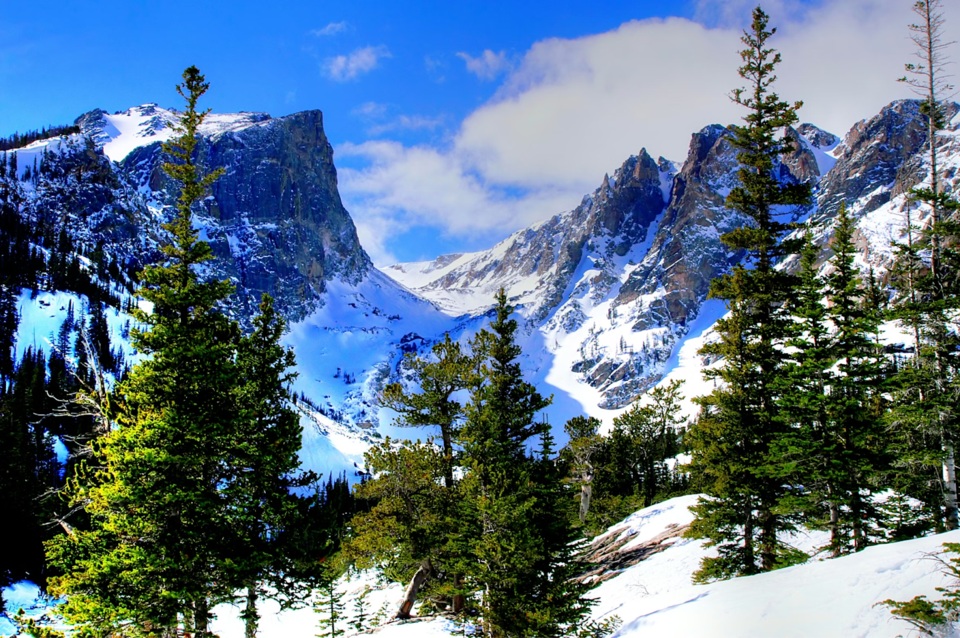
Photo by Michael Kirsh on Unsplash
Landscapes, Wildlife, and Ecosystems
Elevation determines everything here. The park’s remarkable verticality creates distinct ecological zones, each with its own character and inhabitants.
The Montane zone stretches from 5,600 to 9,500 feet, where ponderosa pines shade open meadows and mule deer graze in early morning light. The air still feels familiar at these elevations. Climb higher into the Subalpine zone between 9,000 and 11,000 feet, and dense subalpine fir and Engelmann spruce forests create cathedral-like canopies. The temperature drops. The trails steepen. Above 11,000 feet, the Alpine Tundra takes over with its stark, windswept landscape where only the hardiest plants survive. Tiny wildflowers bloom in brilliant colors during the brief summer season. Krummholz trees twist and bend under relentless winds. Cushion plants hug the ground for warmth.
Wildlife thrives across all these zones. The park protects more than 60 species of mammals, from elk, bighorn sheep, moose, and mule deer to the smaller marmots and pikas that scurry across rocky slopes. Everyday sightings of chipmunks become routine. But watching elk in rut during autumn? That’s something else entirely.
Bird watchers find paradise here with more than 280 recorded species. Soaring raptors circle overhead while tiny rosy-finches somehow inhabit the alpine zone year-round. Bring binoculars.
Trail Ridge Road and Scenic Drives
Trail Ridge Road holds the distinction of being the highest continuously paved road in North America. This 48-mile engineering marvel climbs above tree line, crosses the tundra at elevations exceeding 12,000 feet, and delivers views that justify every hairpin turn.
Along this route sits the Alpine Visitor Center at 11,796 feet, the highest elevation visitor center in the entire National Park System. Stop here to catch your breath in the thin mountain air, absorb the panoramic vistas, and learn about the unique high-altitude environment that surrounds the parking lot.
The drive takes two to three hours without stops. Nobody finishes in two to three hours. The overlooks demand attention. The short trail access points beckon. Plan for a full day.
Winter visitors should note that Trail Ridge Road typically opens by late May (weather permitting) and closes in mid-October when snow accumulates, so planning around this seasonal access is essential for those hoping to drive the entire route.
Best Hiking Trails for Different Skill Levels
More than 300 miles of trails wind through every ecosystem the park contains. Something exists for everyone, from families with small children to experienced mountaineers chasing summits.
Beginners will find plenty of manageable options. Sprague Lake offers an easy, wheelchair-accessible loop with views of Flattop Mountain and Hallett Peak, while the Coyote Valley Trail on the western side provides level terrain through meadows where moose frequently graze. The Bear Lake corridor holds several of the park’s most popular beginner and intermediate trails, covered in detail below.
Intermediate hikers can tackle routes that demand moderate effort but reward every step with spectacular alpine scenery: Loch Lake Trail, Chasm Lake, Sky Pond, Odessa and Fern Lakes, and Lake Haiyaha all fit this category.
For the ambitious, Longs Peak stands at 14,259 feet as the park’s highest summit. This iconic “fourteener” requires advanced preparation, an early start (successful summits typically begin before 3 AM), and experience with high-altitude conditions. Those seeking alternatives will find 72 peaks rising above 12,000 feet throughout the park.
Detailed trail information and recommendations are available for those looking to explore the best hiking trails in Rocky Mountain National Park and plan their perfect adventure.
Bear Lake: The Park’s Most Visited Destination
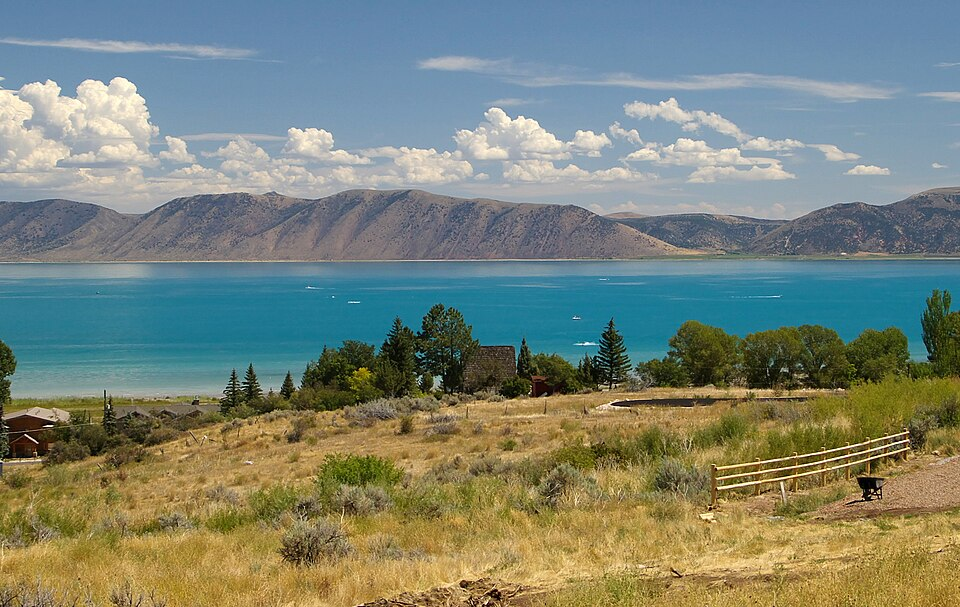
Photo by kla4067 on Wikimedia
Bear Lake draws more visitors than any other single spot in the park, and for good reason. The lake itself sits at 9,475 feet, ringed by subalpine fir and framed by Hallett Peak and Flattop Mountain, with a flat, half-mile loop trail that suits nearly every fitness level and doubles as the launch point for some of the park’s best-loved hikes.
From the Bear Lake trailhead, the walk to Nymph, Dream, and Emerald Lakes covers 3.6 miles round trip with manageable elevation gain, making it a favorite for visitors acclimating to the altitude. Dream Lake alone is reachable in about a mile, roughly 30 minutes each way, and consistently ranks among the shortest routes to a genuine alpine payoff. More ambitious hikers continue on to Lake Haiyaha or push toward Flattop Mountain, while Glacier Gorge, just down the road, connects to Alberta Falls, The Loch, and Sky Pond.
Because of its popularity, the Bear Lake corridor operates under its own access rules. The parking lots at Bear Lake and Glacier Gorge routinely fill by 6 to 7 AM during summer, and a Timed Entry + Bear Lake Road permit, separate from the park’s general timed entry permit, is required for vehicles entering the corridor between 5 AM and 6 PM from late May through mid-October. Swimming and boating are not allowed at Bear Lake itself, which helps protect the shoreline and the wildlife that depends on it.
Visitors who arrive without a permit, or who simply prefer not to chase parking, can use the free hiker shuttle. The Bear Lake Route and Moraine Park Route shuttles run from the Estes Park Visitor Center and the park’s own Park & Ride facility, dropping riders directly at the Bear Lake, Glacier Gorge, and Moraine Park trailheads throughout the day. Riding the shuttle sidesteps the parking search entirely and remains one of the most reliable ways to reach the corridor during peak season.
Bear Lake at a glance:
- Trail: half-mile, flat, wheelchair-accessible loop around the lake itself
- Nearby hikes: Nymph, Dream, and Emerald Lakes (3.6 miles round trip); Lake Haiyaha; Flattop Mountain; Glacier Gorge access to Alberta Falls, The Loch, and Sky Pond
- Permit: Timed Entry + Bear Lake Road permit required 5 AM-6 PM, late May through mid-October
- Parking: Bear Lake and Glacier Gorge lots typically fill by 6-7 AM in summer
- Shuttle: free Bear Lake Route and Moraine Park Route shuttles from the Estes Park Visitor Center and Park & Ride
- Rules: no swimming or boating at Bear Lake
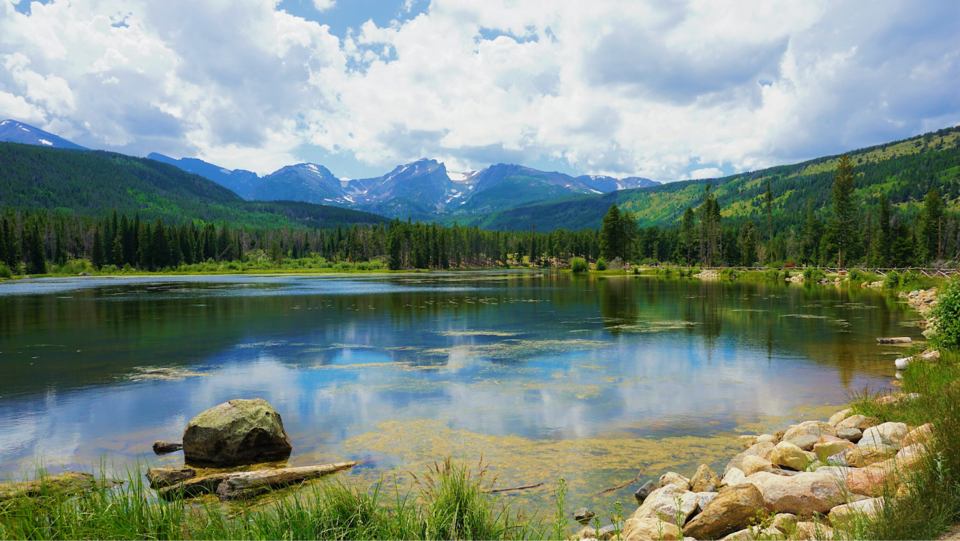
Photo by Lauren Lopes on Unsplash
Things to Do in Rocky Mountain National Park
Hiking dominates visitor activity, but the park offers much more for those willing to explore.
Wildlife viewing attracts photographers and nature lovers throughout the year, with elk, moose, bighorn sheep, and numerous bird species appearing regularly along roadways and trails. The Kawuneeche Valley on the west side and Moraine Park on the east side produce the most consistent sightings for those willing to bring patience and a camera with a good zoom lens.
Fishing draws anglers to trout-filled streams and lakes throughout the front country and backcountry, and many visitors hire guides who know the best spots and understand the regulations. Horseback riding provides another way to experience the trails, with several outfitters offering guided rides through quiet backcountry routes that let travelers see the park the way early visitors did. Rock climbing attracts both beginners and experienced climbers to the park’s granite faces, while winter opens up snowshoeing, cross-country skiing, and even ice climbing on frozen waterfalls.
Cyclists can access the park with specific entry fees of $15 for one day or $20 for seven days.
Pet owners should note that their companions are strictly prohibited on all hiking trails and in the backcountry. Pets are permitted only in vehicle-accessible areas including roadsides, parking lots, picnic areas, and campgrounds. This policy protects wildlife and ensures visitor safety.
For those who enjoy exploring the best national parks in Colorado, Rocky Mountain consistently ranks among the top destinations. Visitors seeking other dramatic Colorado landscapes might also consider the Royal Gorge Bridge & Park for a different perspective on the state’s geological wonders.
When to Visit and What Each Season Offers
The park never closes. Twenty-four hours a day, 365 days a year, these mountains remain accessible. But each season offers a fundamentally different experience.
Summer runs from Memorial Day through Labor Day and represents peak season for good reason. Trails are snow-free, wildlife is active, and wildflowers bloom across alpine meadows. The tradeoff comes in the form of crowds, with parking lots at Bear Lake filling before breakfast and timed entry permits required for all visitors.
Ask locals their favorite time to visit and most will say autumn, which stretches from Labor Day through mid-October. Crowds thin out while gold and orange paint the mountainsides. Elk rut creates dramatic wildlife viewing opportunities. The weather remains pleasant for hiking, though visitors should prepare for the possibility of early snow at higher elevations.
Winter transforms the park into a snow-covered wonderland after Trail Ridge Road closes. Snowshoeing, cross-country skiing, and wildlife viewing continue for those willing to brave the cold, with Moraine Park Campground remaining open as the only option for adventurous campers.
Spring brings melting snow, rushing waterfalls, and fewer visitors. Many trails remain impassable until late May or June, but wildflowers begin appearing at lower elevations as wildlife becomes active again after the quiet winter months.
The park offers fee-free days throughout the year, providing budget-conscious visitors with opportunities to experience this natural treasure without an entrance fee.
Planning a Day Trip vs. a Multi-Day Visit
Both approaches work well here, and the right choice usually comes down to how many trails a visitor wants to cover and how much driving they’re willing to do in a single day.
A day trip suits Front Range residents well, given how close Longmont, Boulder, Denver, and Fort Collins all sit to the park’s east side. A well-planned day typically covers one major trail area, such as the Bear Lake corridor or Moraine Park, along with a stretch of Trail Ridge Road if time allows. Leaving before sunrise makes the difference between finding parking and circling a full lot, especially at Bear Lake and Glacier Gorge. Visitors pairing a Rocky Mountain day with a broader Colorado itinerary often build it around a stop in one of the state’s mountain towns on the way home.
A multi-day visit opens up the park considerably. Two or three nights allow time to explore both the eastern and western slopes, tackle a longer hike like Sky Pond or Chasm Lake without rushing, and catch sunrise or sunset light on the peaks, which the midday day-trip crowd typically misses. Staying in Estes Park keeps the east side trails and Trail Ridge Road within easy reach, while a night in Grand Lake opens up the quieter Kawuneeche Valley and the park’s western trailheads. Multi-day visitors also have more flexibility to shift plans around weather, since afternoon thunderstorms are common enough in summer to derail a single tightly scheduled day.
For those building a longer Colorado itinerary, the park also pairs naturally with a broader loop through the state’s mountain towns, and travelers heading south afterward often extend the trip toward Colorado Springs for a second dose of alpine scenery.
Day trip works well if:
- You’re coming from Longmont, Boulder, Denver, or Fort Collins
- You want to focus on one trail area, such as Bear Lake or Moraine Park
- You can leave before sunrise to beat trailhead parking
Multi-day works well if:
- You want to cover both the eastern and western slopes
- You want time for longer hikes like Sky Pond or Chasm Lake
- You want flexibility around afternoon thunderstorms and shifting weather
Entrance Fees, Timed Entry, and Visitor Tips
A few essentials to know before arrival will make the visit considerably smoother. All payments are cashless, requiring credit or debit cards at fee stations. Those who prefer cash can purchase passes at the Rocky Mountain Conservancy Nature Store.
Entrance fees at a glance:
- Vehicle: $30/day or $35/week
- Rocky Mountain National Park Annual Pass: $70
- Pedestrians/cyclists: $15/day or $20/week
- Motorcycle: $25/day or $30/week
- America the Beautiful Annual Pass (all national parks): $80
- Senior Pass (62+): $80 lifetime or $20 annually
Timed entry permits are mandatory from May 22 through mid-October 2026, with no exceptions. A $2 reservation processing fee applies. Two permit types exist: the Timed Entry + Bear Lake Road permit, required for Bear Lake corridor access between 5 AM and 6 PM and running May 22 through October 18, 2026, detailed further in the Bear Lake section above, and the General Timed Entry permit, covering the rest of the park from 9 AM to 2 PM and running May 22 through October 12, 2026.
Reservations can be made at Recreation.gov, and securing permits early during peak season is essential since entrance stations will turn away visitors without valid permits. Mountain weather changes fast, with temperatures swinging 20 to 30 degrees between high elevations and lower valleys. Summer thunderstorms develop quickly in the afternoons.
Pack layers, bring rain gear, and carry extra water. When hiking above tree line, watch the horizon for developing storms and always know your escape route.
Where to Stay Near the Park
Options exist both within park boundaries and in surrounding communities, with something available for every budget and comfort level.
The park operates five frontcountry campgrounds at $30 per night during summer: Aspenglen, Glacier Basin, Moraine Park, Timber Creek, and Longs Peak. Aspenglen, Glacier Basin, and Moraine Park accept reservations up to six months in advance and fill quickly, while Longs Peak and Timber Creek operate on a first-come, first-served basis. Timber Creek on the western side lies in the heart of the Kawuneeche Valley with 98 spacious, scenic campsites that make the drive worthwhile.
Winter camping drops to $18 per night when water services are off, with Moraine Park serving as the only campground open during the colder months on a first-come, first-served basis.
Backcountry camping requires a $36 permit processing fee for overnight wilderness stays. Permits must be obtained in advance since high demand during peak seasons makes last-minute availability rare.
Gateway communities provide additional options for those preferring more amenities. Estes Park on the east side offers abundant lodging ranging from hotels and cabins to bed-and-breakfasts. Grand Lake on the west side provides a quieter alternative with its own selection of accommodations. Booking well in advance is essential for summer visits.
For comprehensive planning resources and current conditions, the Rocky Mountain National Park website offers detailed guidance on everything from trail status to recent wildlife sightings.
Start Planning Your Rocky Mountain Adventure
These mountains have something for everyone. Solitude on remote backcountry trails. Elk grazing in mountain meadows. Sunrise from a 14,000-foot summit. A leisurely drive through alpine tundra. The experience stays with visitors long after they leave.
The best way to appreciate Rocky Mountain National Park is simple: get out into it.
Reserve timed entry permits. Pack layers for unpredictable weather. Arrive early to beat the crowds. Stay late to watch the alpenglow on the peaks.
Whether spending a single afternoon on Trail Ridge Road or dedicating a full week to exploring every corner, these mountains await with open trails, stunning vistas, and wildlife around every bend.
Start planning today. Discover why millions of visitors return to these peaks year after year.